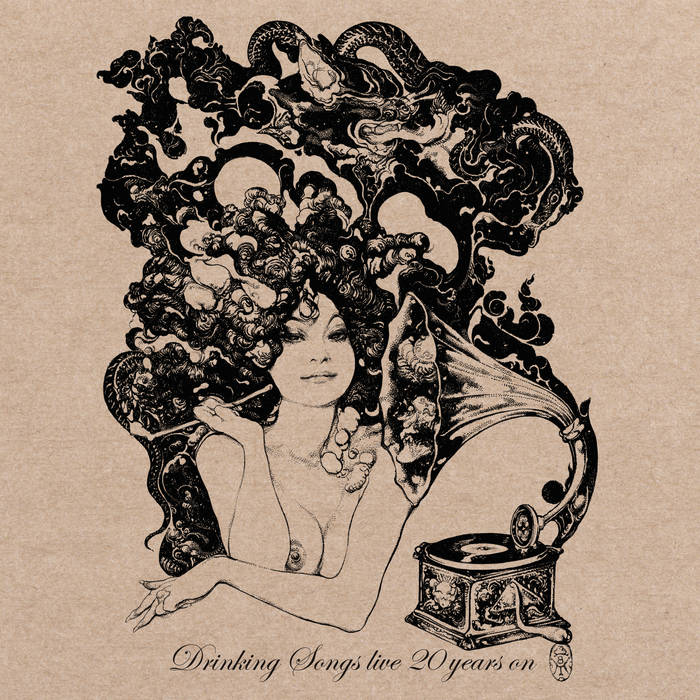
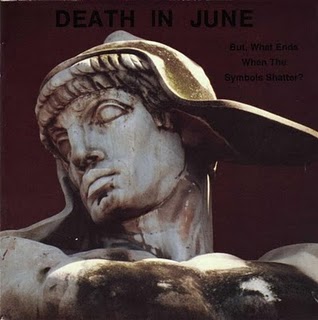

Each instrument arrives without announcing itself, each pattern repeats without insisting. The peace here isn't the absence of noise; it's the presence of something that doesn't need you to do anything except be there. I have never once pressed play on this record without the room changing.

I first learned about this from V for Vendetta (2005), one of my ever favorite films, but didn't pay attention then. I only truly discovered it during the 2022 Russian invasion of Ukraine. The irony wasn't lost on me. It affects me deeply and gives me vibes from Shadows of Forgotten Ancestors. I only play it on special occasions due to its effect on me.

If Drinking Songs was the wound, Howling Songs is what the wound looks like a year later, not healed, just quieter. The guitar figures stretch longer, the voice pulls further back, and what's left is a kind of desolation that doesn't ask for your sympathy. "The Kursk" spends twelve minutes on a single motif that never resolves, because some things don't. Time here doesn't pass; it accumulates. #Matt Elliot
The guitar repeats, the voice barely holds, the songs go on longer than comfort allows. Elliott found that the quietest thing he could make was also the heaviest. I come back to it rarely, and each time it costs something. #Matt Elliot
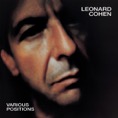
A dead man's voice in a room, and his son arranging the furniture around it. Leonard left the words, the cadence, the breath between lines, and Adam built the rest like someone finishing a letter his father started. "Happens to the Heart" is an entire life in four minutes, recited by a man who knew exactly how many verses he had left. The album doesn't feel posthumous. It feels like someone speaking to you from the other side of a very thin wall. #Leonard Cohen
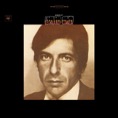
My ever favorite Cohen album. I discovered him through 'Sing Another Song, Boys' while studying biochemistry in high school. I didn't like it initially but I couldn't stop listening. To this day, chemical formulas intrude into my head whenever I play it. The song is a strange companion, but a faithful one. 'Avalanche' opens the record like a warning. #Leonard Cohen
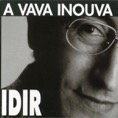
A lullaby. That's all it was supposed to be, a Kabyle lullaby, the kind grandmothers sang to children who didn't yet know their language was a political act. Idir sang it once on Algerian radio, almost by accident, and it became the sound of an entire people refusing to be erased. Every culture that has survived against the odds has a song like this, the one that says: we are still here, and we remember what they want us to forget.
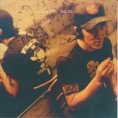
He sang so quietly you had to lean in, and what you found when you got close was unbearable. Either/Or is the record where every melody sounds like a lullaby for someone who can't sleep, and XO is what happened when he tried to make something larger and the sorrow scaled with it. The devastation in his music isn't loud. It's precise. He named things the way a surgeon names what he's cutting.
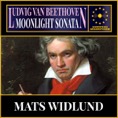
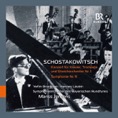
Everyone knows the first movement, the slow one, the one that plays in films when someone stands by a window in the rain. Almost no one remembers the third. And the third movement is where Beethoven actually lives: furious, relentless, a man going deaf writing music he would never fully hear, and refusing, with every hammered note, to be pitied for it. Für Elise is the gentlest thing he ever wrote, and it's unfinished, like all tenderness. The Ninth Symphony is what happens when rage finds a reason to become joy. It shouldn't work. It works.

The first three notes fill whatever room they're played in, and then the room is no longer the same room. Organ music doesn't ask you to listen, it relocates you. The body knows before the mind does: stone, height, the physics of air pushed through pipes built centuries before you were born. The Toccata in D minor is the door; what's on the other side is Bach's understanding that sound is architecture. Air on the G String is the gentler proof, a single line that moves like breath held and slowly released. The Brandenburg No. 3 is joy, the kind that requires no justification and no apology.
The aria is thirty-two bars of simplicity. Then thirty variations happen to it, everything that can be done to a theme is done, and when the aria returns at the end, note for note, you are the one who is different. Gould recorded it twice. At twenty-two he played it like a young man certain the world was his to dismantle. At fifty, a year before he died, he played it like someone putting each note carefully back where he found it. The same hands, the same keys, and between them an entire life.
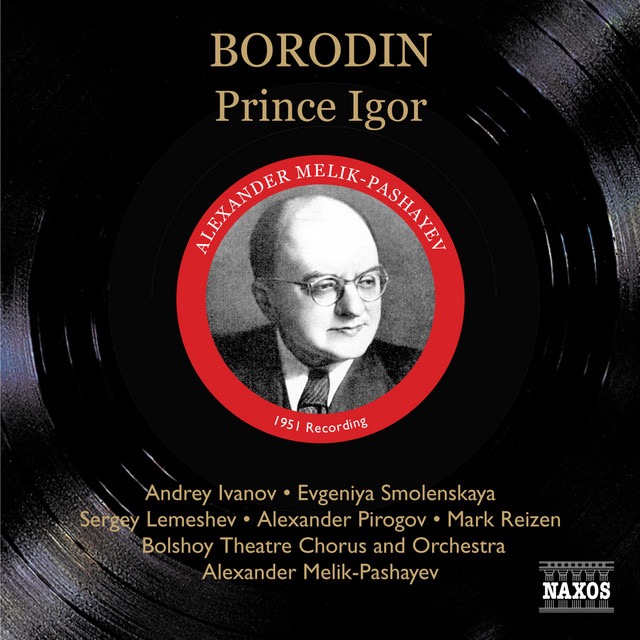
Prince Igor played automatically on my playlist, I didn't notice it. Rana from work noticed it though, and I listened to it later carefully.
The oud begins and something in the chest tightens, not pain exactly, but the memory of a place you can no longer reach. Mounib doesn't sing about nostalgia; he sings from inside it, the way you don't describe a room you're standing in. Every phrase descends, and every descent is a small surrender. I avoid this song most days because it rearranges something I've spent the morning putting in order.