A collection of my favorite classical, world music, and singer-songwriter albums.
(⊹) is my favorite track off the record.
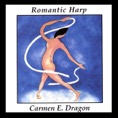
There is a kind of silence that only exists between harp notes, not empty, but held, the way breath is held before saying something true. Clair de Lune here is not performed so much as remembered, as though the melody always existed and the harpist is simply agreeing with it. I play this when the night has gone on too long and I need the room to become something kinder. It asks nothing. It is just stillness, given a shape.
[permlink]
Liebesleid, love's sorrow. Not love's tragedy, not love's death. Its sorrow. The smaller, more permanent thing. The violin and the piano here are two people who understand each other completely but cannot help each other, and the beauty of that helplessness is the whole point. I come back to this recording when I need to be reminded that tenderness and grief are the same gesture, just performed with different hands.
[permlink]
Little Black Angel sounds like a hymn being sung at the end of the world by someone who isn't sure if they're mourning it or welcoming what comes next. There is a voice and a guitar and a drum that sounds like marching, and you cannot tell if the march is toward something or away from everything. That ambiguity is the whole album, the feeling of standing in a doorway between two darknesses, unable to say which one is home.
[permlink]
A collection that somehow works as one long letter from a place that no longer exists. Fall Apart is the center of gravity, a voice so exposed it sounds like someone talking in their sleep, saying the things they'd never say awake. The songs come from different years, different moods, but together they build a world: quiet, unsettling, strangely beautiful, like finding flowers growing in a bombed-out building.
[permlink]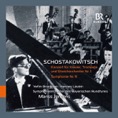
Waltz No. 2 is the most elegant lie ever composed. It sounds like champagne and chandeliers and none of the terror underneath, a man writing beauty because beauty was the only safe place to hide his rage. Shostakovich composed waltzes while his friends disappeared, and if you listen knowing that, the elegance becomes unbearable. Every note is a mask. Every rest is what he couldn't say. This is what it sounds like to survive by being lovely.
[permlink]
Between the Bars is the most tender song ever written about self-destruction. It doesn't ask to be saved, it asks to be held, just for now, just until tomorrow, and tomorrow is a word that means nothing in the song's world. Elliott sings it like a lullaby to someone who will not wake up better, and the worst part is how beautiful it sounds, how easy it would be to stay inside it. The whole album lives in that impossible place: too gentle to be a warning, too honest to be anything else.
[permlink]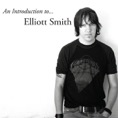
"I'll fake it through the day with some help from Johnnie Walker Red." Miss Misery is the door into Elliott's world, you hear it once and you recognize the voice immediately, the way you recognize a handwriting you've seen in a letter that wasn't meant for you. This collection is where you start. Not because it's comprehensive, but because it teaches you how to listen to him: quietly, with the lights low, willing to hear what's actually being said beneath what's being sung.
[permlink]
Waltz #2 is about his mother, and you can hear it, the way the strings build around his voice like arms that can't quite reach. "I'm never gonna know you now, but I'm gonna love you anyhow" is the most devastated line he ever wrote, and here it has an orchestra behind it, which doesn't make it grander, just more unbearable. The whole album is Elliott carrying his past into bigger rooms, and the rooms don't help. The arrangements swell and the fragility stays exactly where it was.
[permlink]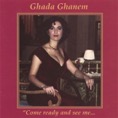
There is something about a Lebanese voice singing old European arias that feels like a homecoming nobody planned, as if the music had always been waiting for this particular throat, this particular ache. Ghada takes pieces the world thinks it knows and returns them changed, warmed, with the unmistakable color of a voice that learned to sing in Arabic first and carries that warmth into every language it touches. The classical pieces become something more personal here, like prayers translated not into another language but into another longing.
[permlink]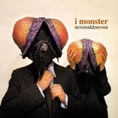
Daydream in Blue borrows a voice from 1970 and places it inside a dream that hasn't happened yet, and the result is a song that belongs to no decade, no place, only to the feeling of waking slowly with nowhere to be. The album title is a palindrome, and that's the logic of the whole record: everything mirrors, everything returns, every ending is also a beginning heard backwards. It sounds like memory itself, not a specific one, but the texture of remembering, the soft static of a life being replayed at half speed.
[permlink]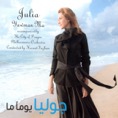
I loved Julia.
[permlink]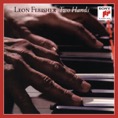
He lost his right hand for thirty-six years. Think about that, a pianist, half a life without both hands on the keys. And then he got it back, and he sat down and recorded this. The Schubert here is not virtuosity. It is gratitude so large it has no name. Every note played by the returned hand carries the weight of every note it missed, and you can hear it: not in the technique, but in the patience, the way he lets each phrase breathe as though breathing itself were the miracle. This is what it sounds like to be given back something you had already grieved.
[permlink]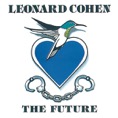
Cohen sings like a man dictating his own eulogy and finding it funny. "There is a crack in everything, that's how the light gets in." You can build a theology on that line, and people have, but the song earns it, five minutes of climbing toward something that might be faith or might be resignation wearing faith's clothes. Democracy is a love letter to a country written by someone who will never belong to it. The whole album is dark and prophetic and strangely comforting, the way only someone who has already accepted the worst can be comforting.
[permlink]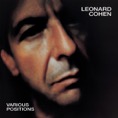
Hallelujah before it became everyone's, when it was still his, still broken, still sacred. The organ is cheap, the voice barely sings, and the words are biblical and erotic in the same breath: "she tied you to a kitchen chair, she broke your throne, she cut your hair." The label heard this album and said no. They couldn't hear what was inside it yet. It took the rest of the world twenty years to understand what Cohen already knew: that the holiest prayers are the ones spoken in bed, in the dark, by people who aren't sure God is listening.
[permlink]
Two lovers who can only be together by ceasing to be people, they become butterflies, because the world will not let them be anything else. The violin tells this story the way only a violin can: by becoming the ache itself, by bending notes the way grief bends time. Lu Siqing plays it as if the instrument remembers being something older, something with silk strings, something that has always known this particular sadness. The concerto is Chinese Romeo and Juliet, but that comparison is too small. It is every love that required transformation to survive, which is to say, every love.
[permlink]
The oud opens and the century collapses. You're nowhere and everywhere Arabic has ever been spoken. Jawaz Al Safar, The Passport, is Darwish's poem about a homeland that exists more as memory than as coordinates, and Khalife sets it to music that moves between the Arabic and the Western the way an exile moves between languages, never fully at home in either. The orchestra swells behind the oud and it sounds like longing given a national anthem. This is not music about Palestine. This is Palestine, singing.
[permlink]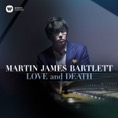
Liebestraum, dream of love. Liszt wrote it as though love and death were the same story told at different speeds, and they are. Bartlett plays it with an unusual patience, letting each phrase arrive like someone who knows that the most important words are the ones you almost didn't say. There is no rushing here, only unfolding. The whole album lives in that territory where desire becomes elegy, where reaching for someone and losing them is a single continuous motion. Young hands, old understanding.
[permlink]
Before they were banned. Before the borders closed around them. Raksit Leila opens with a violin that could be from another century, and then the guitars and the voice arrive and you're in Beirut, in a room full of people who have decided to stop being afraid. Sinno sings in Arabic, colloquial, unashamed, queer, alive, and the rawness of the recording is the rawness of the moment itself: something being said for the first time, too urgent to polish, too necessary to wait.
[permlink]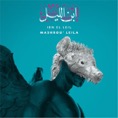
Roman is a love song disguised as a dance track, or a dance track that finally admitted it was a love song all along. Sinno sings about being himself in a city that loves him and punishes him in the same breath, and the synths pulse like a heartbeat that refuses to slow down. This is what it sounds like when the small rebellions win, not the revolution, not the overthrow, just a person dancing in a room and meaning it, being exactly who they are for the length of a song. Sometimes that is enough. Sometimes that is everything.
[permlink]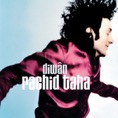
Ya Rayah, "O wanderer, where are you going? You will only return with regret." El Harrachi wrote it in 1973 about leaving Algeria, and Taha sang it decades later as a man who had lived the leaving, who knew the song was not a warning but a biography. Every exile carries a song like this whether they know it or not, the one about departure that doubles as a prayer for arrival, knowing arrival never comes, not really. Taha's voice wraps rock and raï around the original like a coat around someone who will always be cold.
[permlink]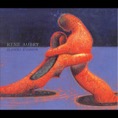
Après la Pluie, after the rain. That exact moment when the storm has passed and the world hasn't yet decided what to become next. The guitar enters alone, fingerpicked, close enough to hear the fingers on the strings, and when the strings arrive halfway through it feels less like an arrangement and more like the sky clearing. Aubry writes music the way some people write letters they never send, intimate, unhurried, meant for one person who may not exist. I listen to this when I need the world to be briefly, gently, enough.
[permlink]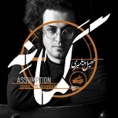
Solo guitar, recorded as though the microphone were a confidant. Each piece unfolds like a question asked in a room where no one else is present, Persian ornamentation spiraling around Western harmonies, two musical traditions meeting not in compromise but in recognition. Peyghambari plays the way certain people speak: slowly, precisely, as though every phrase costs something and is worth the cost. The album is called Assumptions, and that feels right, it assumes you are listening, assumes you are patient, assumes the silence between notes is as important as what fills it.
[permlink]