
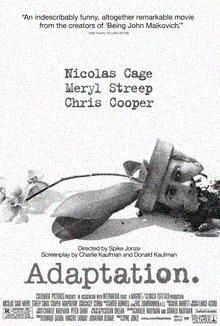
Adaptation. (2002)
Charlie Kaufman writes a film about failing to write a film about a book about orchids. He put his actual neuroses on screen; the self-loathing and the conviction that anything authentic must also be uncommercial. Then he invented a twin brother who is everything he wishes he could be. Confident, productive, happy.
The third act surrenders to every convention Charlie spent the whole film refusing. Car chases, drug dealers, death. You can feel his horror at his own script. But that's the adaptation. Not of the book. Of himself. Purity is a prison and the refusal to compromise is its own cowardice. Donald dies and Charlie finishes the screenplay, and the film you're watching is the proof. #Cinema
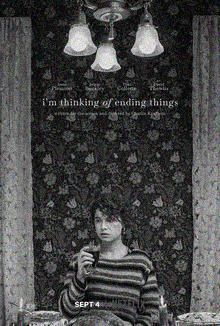
I'm Thinking of Ending Things (2020)
Everything in this film is a construction: the girlfriend, the drive, the parents, the farmhouse. All of it is memory being revised by someone who has already given up. The "young woman" keeps changing because she was never real. She's every version of a life the janitor never lived: the physicist, the poet, the painter. All the people he could have spoken to but didn't.
The old man watching the young couple through frosted glass. The parents aging and de-aging. The empty school. It amounts to one long, quiet accounting of what was lost by being too afraid. The title is not a metaphor. #Cinema

Magnolia (1999)
Three hours of people drowning and none of them know how to ask for help. Earl Partridge dying and unable to undo decades of absence. Frank Mackey performing masculinity so aggressively it takes a while to realize it's grief. Claudia can't stop destroying herself. All of them connected by threads they can't see.
Then it rains frogs. Which is either absurd or honest, because sometimes the world is so stuck that nothing short of something biblical can interrupt it. The frogs don't explain anything. They just make everyone stop. And in that pause, some of them find enough to start again. #Cinema
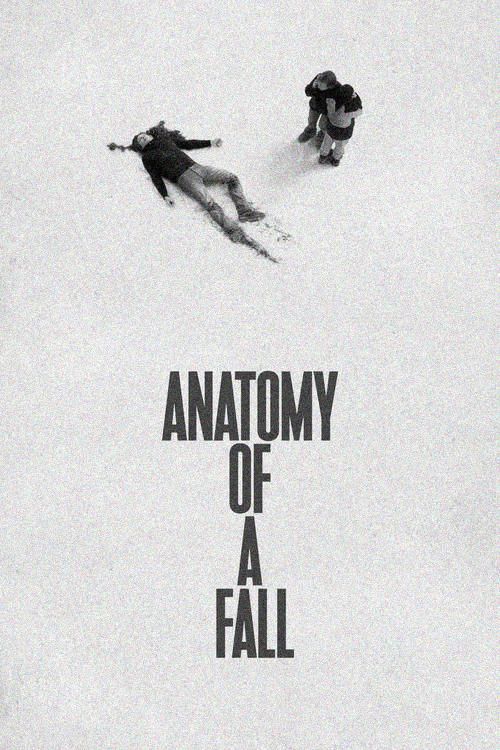
Anatomy of a Fall (2023)
You spend hours in a courtroom and you never find out what happened. The film isn't interested in the truth but interested in the fact that Sandra has to perform a version of grief that strangers will find acceptable. Too composed and she's cold, cries too much and she's manipulating. The trial doesn't ask whether she did it. It asks whether she can look like someone who didn't.
Daniel choosing to testify is the part I keep thinking about. A child deciding which parent to believe. Not which one is right, just which version of his own life he can live with. #Cinema
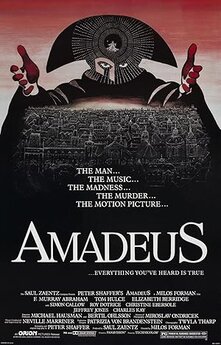
Amadeus (1984)
Salieri has everything. Discipline, knowledge, institutional power, decades of devotion. None of it matters. Mozart walks in and writes things that Salieri can hear are divine and knows he will never produce. The cruelest part is that Salieri is the only person in the room skilled enough to understand exactly how far behind he is. He doesn't hate out of ignoranc but out of comprehension. I think about that distinction a lot.
Most people will never be Mozart. But most people are not Salieri either; they're the audience who can't tell the difference, and I think that's actually the better position to be in. And Mozart dies thinking about money while the music itself is already immortal and doesn't need him anymore. #Cinema #Music
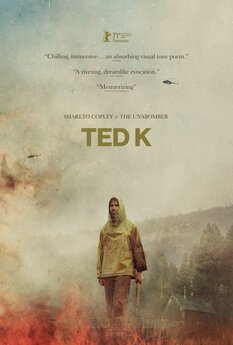
Ted K (2021)
Industrial society has created conditions that most people can't articulate their discomfort with, and Kaczynski articulated them clearly before choosing the response. #Cinema
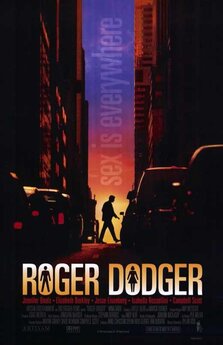
Roger Dodger (2002)
I watch this film every so often to make sure I'm not becoming Roger. The first person to recommend it was in the Nietzsche reading group; they said he would have loved it. I'm still not sure if that was a compliment. Roger is sharp and articulate and uses both like weapons because he doesn't know what else to do with them. You catch a glimpse of who he was before all the armour and it's almost sad how hard he works to make sure nobody sees that person again. #Cinema
Whiplash (2014)
Fletcher asks the question nobody around Andrew is willing to ask: what are you actually prepared to lose? Everyone else offers the gentle version of success. Try your best, be nice. Fletcher offers the terrifying one: there's a level beyond good, and getting there will cost you everything that keeps you normal.
That final performance. Andrew is bleeding and humiliated and he goes back out anyway. Not for Fletcher. For something neither of them fully controls. The film doesn't say whether he chose right. It just shows someone who chose completely, and leaves you to decide whether that's inspiring or horrifying. #Cinema
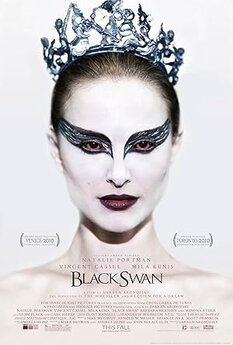
Black Swan (2010)
Nina decides that perfection matters more than survival and the film follows that decision to its end. She cracks bones and peels skin and hallucinates and none of it stops her because stopping would mean accepting limits. Maybe that's how al-Mutanabbi achieved what he achieved too: by refusing the boundary between self and work until there's nothing left to separate. "I was perfect" is the last thing she says. She means it. That it kills her is not the point, and you watch her face and know she would do it again. #Cinema
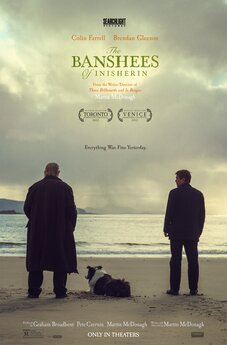
The Banshees of Inisherin (2022)
Colm decides one morning that Pádraic is not enough. Not that he's bad, just not enough. He wants to write music before he dies instead of talking about nothing at a pub, and he's willing to cut off his own fingers to enforce that boundary. Pádraic has no idea what happened to their friendship, and it's heartbreaking specifically because he's right: kindness should be enough. But it isn't always. Sometimes someone decides they'd rather have meaning than comfort, and the kind person standing next to them gets destroyed by it. #Cinema
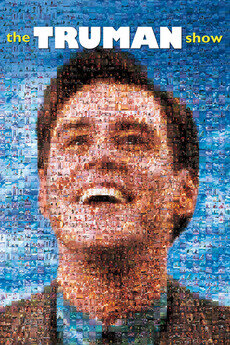
The True Man (1998)
Every paranoid suspicion Truman ever had turns out to be justified. Most films treat paranoia as illness. This one treats it as clarity. The real horror is not that his life is staged but that everyone he trusted was in on it and they called it love.
He finds the door in the wall of the sky and he could turn around. Go back. There's comfort in a life where nothing surprises you, and the film understands why that's tempting. But he takes the bow and walks through into whatever's on the other side. The film never shows you what's out there because that was never the point. The point is he chose to find out. #Cinema
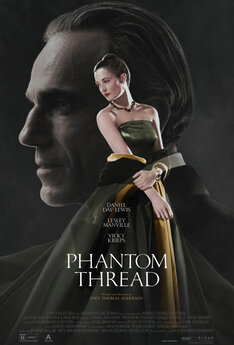
Phantom Thread (2017)
Reynolds builds dresses the way other people build walls. Every stitch is control, every meal is ritual. Alma walks in and starts making noise at breakfast and he doesn't know what to do with that. The poisoning scenes are the truest part: a man who can only let himself be vulnerable when he has no choice, and a woman who figured out that his surrender will never be given, only taken. It's not a love story in any normal sense. It's two people who found the one arrangement where they can both survive, and it involves mushrooms. #Cinema
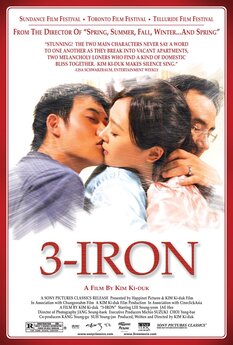
3-Iron (2004)
- [2026-01-02 Fri 00:06]; After a recent rewatch, I don't think I really like the movie. The silence that once felt meaningful now feels like an excuse not to say anything. I used to think Tae-suk and Sun-hwa shared something beyond language but on second viewing it looked more like two people who never had to actually know each other. Which is easier than connection and less interesting than it pretends to be. #Cinema
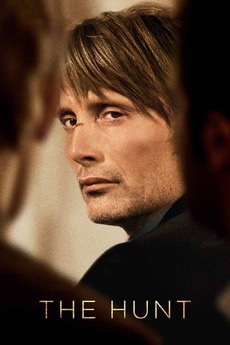
The Hunt (2012)
A great, painful watch. I wish more people would see it.
It refuses the comfort of moral shortcuts. It shows how a community's need for innocence can turn suspicion into certainty, and certainty into violence, without the slow discipline of proof. Suffering alone does not equal truth, and treating "the victim" as an unquestionable oracle replaces justice with ritual.
This is why the role of the defense lawyer is not a cynical technicality but a moral necessity: to defend anyone, even those accused of the most repellent crimes, is not to excuse the act but to protect the integrity of judgment itself. A system that refuses defense has already decided. And a system that has already decided no longer seeks truth; it seeks purification. That final shot says it all: the community forgave Lucas without ever believing him. He knows. They know he knows. Everyone pretends otherwise. #Cinema
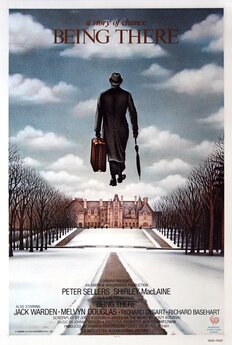
Being There (1979)
Chance knows nothing. He speaks in gardening metaphors because that's all he has. Politicians and businessmen hear wisdom because they desperately need someone to be wise. He doesn't change once during the film. Everyone else changes around him, shaping him into whatever they need, and he just stands there. The final shot of him walking on water: I still don't know what it means, and I've seen this film three times. I think Ashby didn't know either, and I think that's what makes it honest. #Cinema

Falling Down (1993)
Bad day. Stuck in traffic, the air conditioning is broken, and something inside him just snaps. What follows is this weird odyssey through Los Angeles where a guy in a short-sleeve shirt gradually escalates from annoyance to violence. Every petty frustration he encounters is real. The fast food that doesn't look like the picture, the construction that's never really about repairs, the prices that keep climbing while wages don't. He's not a hero and the film knows it, but he's speaking to something that a lot of people feel and don't know how to express. That's what makes it uncomfortable. He's all of us on our worst day, with all the stops removed. #Cinema

The Royal Tenenbaums (2001)
Every Tenenbaum was a genius as a child and mediocre as an adult. Royal is a terrible father who wants back in. Anderson puts them all in perfectly symmetrical frames and you'd expect it to feel cold but it doesn't. Richie removing his wristbands in the bathroom. Margot stepping off the bus in slow motion. These are damaged people and the film doesn't try to fix them. It lets them be broken and still treats them as worthy of love. You don't get to choose the damage and you don't get to fix it, you just get to decide whether you stay. #Cinema #The Grand Budapest Hotel (2014)
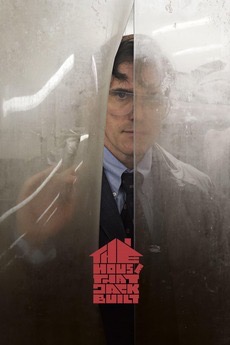
The House That Jack Built (2018)
Dante's Inferno: each murder a circle, each confession a descent. But what he's really doing is making you watch. Jack explains his reasoning, shows the craft, and you keep sitting there. That's the point. The cathedral made of frozen corpses is the most disturbing image I've seen in film. Not because it's horrifying but because it's beautiful and you notice that you noticed. #Cinema
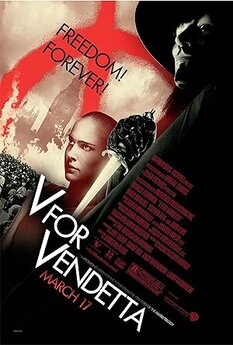
V for Vendetta (2005)
Power lives in buildings and uniforms and the assumption that tomorrow will look like today, and it can be destroyed. When V kills, it feels corrective. The film takes political violence and refuses to apologize for it or explain it away. It just shows it as the outcome of a system that closed every other door.
V is not meant to survive. He's meant to burn bright enough that people stop confusing obedience with safety. When the masks fill the street at the end, it's not a revolution. It's the moment a population decides it would rather be dangerous than comfortable. #Cinema
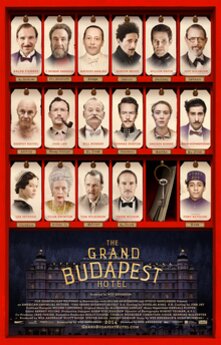
The Grand Budapest Hotel (2014)
Gustave H. maintains perfect manners while fascism rises around him. Not because he doesn't notice but because grace is the only resistance he has. The whole thing is a story inside a story inside a story, and Anderson is telling you from the start that this world probably never existed. But the longing for it is real. And I think the film argues that longing for a more civilized world, even one you made up, is not sentimental. It's a refusal. #Cinema
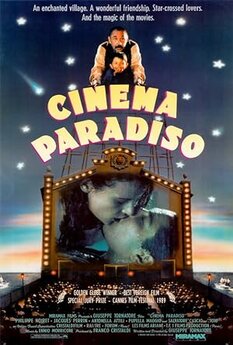
Cinema Paradiso (1988)
Alfredo tells Toto to leave and never come back. Not because he doesn't love him but because he knows what staying does to someone who could be more. Toto leaves. Becomes successful. Never goes back until Alfredo is dead and the cinema is demolished and everything that shaped him exists only in his head. The ending with the censored kisses spliced together is famous because it's beautiful, but the weight of it is what it cost him to earn that reel: thirty years of absence and the man who loved him most dying without him there. #Cinema
Fight Club (1999)
I can't talk about this one. #Cinema #Fight Club