
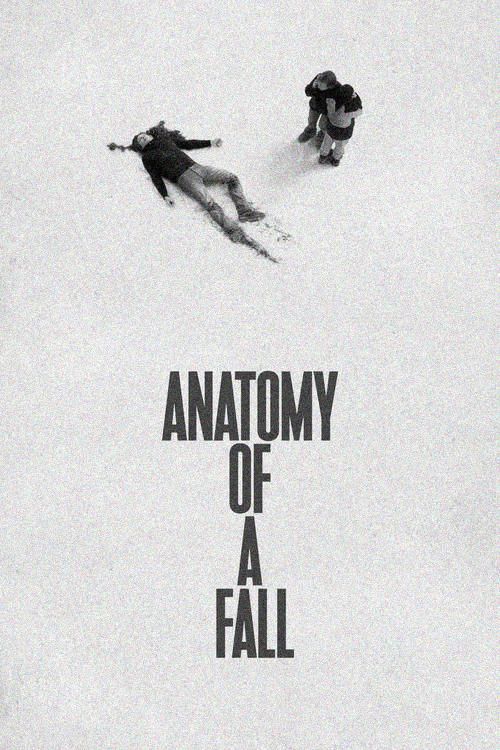
Anatomy of a Fall (2023)
I love movies that refuse to give us certainty. We spend hours in that courtroom, dissecting every word, every gesture, every piece of evidence, and we never truly know what happened. It doesn't matter. It is not about the truth of the fall, but about the impossibility of ever truly knowing another person, even someone you've lived with for years.
Sandra Hüller delivers a performance of remarkable restraint. She shows the impossibility of appearing innocent when every natural reaction can be reinterpreted as guilt. The way the trial forces her to perform a version of herself that will be palatable to the jury, less assertive, more conventionally grieving—exposes how justice systems demand not truth but convincing narrative.
The child, Daniel, caught between parents and between languages, carrying a burden no child should bear. His testimony is the heart of the film, and the way it's handled, with such tenderness and moral complexity questions memory, loyalty, and the stories we tell ourselves to survive.
[permlink]
Amadeus (1984)
There's something almost comforting about how the film portrays mediocrity as its own special kind of hell. Not everyone gets to be Mozart. Most of us are Salieri, working hard and still falling short. But the film doesn't judge him for his jealousy. It just shows you what it costs to want something that badly and know you'll never have it. #Cinema #Music
[permlink]
Ted K (2021)
That cabin in Montana, the silence of the woods, the journals filled with ideas that are uncomfortable precisely because they're not entirely wrong. Industrial society really has created a kind of cage that most people don't even notice they're in. Ted just noticed earlier than everyone else and couldn't figure out how to make anyone listen without making them afraid. #Cinema
[permlink]
Roger Dodger (2002)
I make sure to watch this movie every once and a while to make sure I'm not becoming like Roger. The first one to recommend me this film was in the Nietzsche, they said that he would loved it, I'm quite unsure if they were saying it ironically. The film knows Roger is broken. You see glimpses of who he was before he built this whole persona, and it's almost sad how much effort he puts into being cruel. #Cinema
[permlink]
Whiplash (2014)
"What does it cost to be great?" doesn't give you an easy answer. We all want to believe that passion and hard work are enough, but Fletcher throws a wrench into that whole comforting narrative. He's the guy who actually cares whether anyone achieves something extraordinary. Everyone else in Andrew's life is so supportive and nice, but there's this nagging feeling that their version of success is just showing up and being pleasant.
What gets me every time is that final performance. Andrew's bleeding, exhausted, humiliated, and he chooses to go back out there. Not for Fletcher, really, but for himself and for something bigger than both of them. That moment when they lock eyes and Andrew just takes off on that drum solo, it's like watching someone decide their entire life philosophy in real time. It doesn't tell you if he made the right choice. It just shows you someone becoming exactly what they wanted to be, consequences and all. #Cinema
[permlink]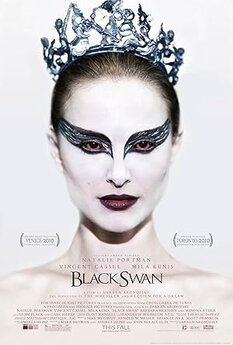
Black Swan (2010)
Black Swan is not about ballet. I mean, yes, there's a lot of ballet, and it's gorgeous and terrifying at the same time. But what it's actually about is that weird thing where you want something so badly that you start to lose yourself in the process. Nina doesn't just want to be perfect, she needs it like oxygen. And the film makes you understand that kind of obsession without judging it too harshly.
The transformation stuff is so unsettling because it feels true somehow. When you push yourself past every limit, when you refuse to let go of control, something has to give. The line between dedication and destruction gets so thin you can't see it anymore. And that final scene where she finally lets go, finally becomes the Black Swan, it's both liberation and annihilation at once. She found perfection, sure, but the cost was everything. Still, you watch her face in that moment and you think… maybe she'd do it all over again. #Cinema
[permlink]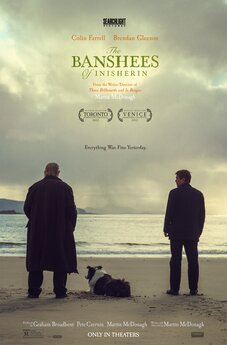
The Banshees of Inisherin (2022)
When you watch Padraic try to understand it and it's heartbreaking because there's nothing to understand really. Sometimes people just grow apart, or one person realizes they want something different from life, and the other person is left standing there confused.
[permlink]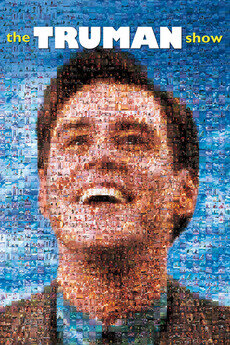
The True Man 1998
I think what makes The Truman Show so brilliant is how it turns paranoia into clarity. Like, imagine suspecting that something's off about your whole life and then finding out you're actually right. Most movies would make that the twist ending, but here it's just the starting point for something bigger. The real question isn't whether Truman's world is fake, it's what he does once he knows. And the film makes you realize that choosing the unknown over comfortable fakeness is probably the most human thing you can do. It's wild how a movie about a guy discovering his life is staged ends up being about what makes anything in our lives genuine.
That moment when Truman hits the wall of the sky and finds the exit door, that's everything. He could turn around, go back to his fake wife and his predictable little routine, and honestly, part of you gets why that might be tempting. But he doesn't. He takes a bow, delivers that perfect "in case I don't see you" line, and walks through the door into total uncertainty. The movie never shows you what's on the other side because it doesn't matter. What matters is that he chose it. Freedom isn't about having a better life waiting for you, it's about claiming the right to find out for yourself.
[permlink]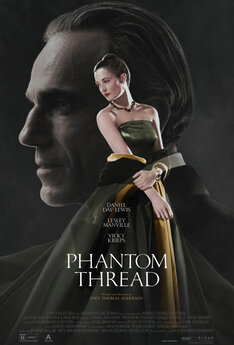
Phantom Thread (2017)
There's something almost hypnotic about watching Reynolds Woodcock work. The way he moves through his world, completely in control, every stitch deliberate. And then Alma walks in and ruins everything in the best possible way. What I love is that the film doesn't pretend love is about finding someone who fits neatly into your life. Sometimes it's about finding someone who disrupts you just enough to make you feel alive again. The poisoning is weird, but also kind of makes sense, here's a man who needs to be knocked down occasionally to remember he's human. #Cinema
[permlink]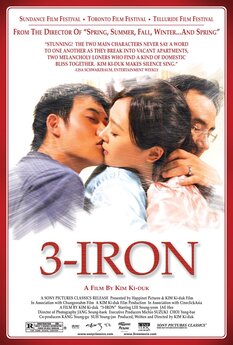
3-Iron (2004)
- [2026-01-02 Fri 00:06]; After a recent rewatch, I don't think I really like the movie.
Almost no dialogue in this entire film and somehow it says more than most movies that never shut up. Tae-suk breaks into empty houses not to steal but to live there temporarily, to exist in other people's spaces without taking anything. And then he finds Sun-hwa and they just… understand each other without words. Kim Ki-duk makes loneliness visible and then shows you how two lonely people can create their own silent world together. That ending where he becomes like a ghost, always behind her husband, always invisible but always present. It shouldn't be romantic but it is. Sometimes the deepest connections are the ones that don't need to be explained. Although it's sad that it's about interrupting a marriage relationship. #Cinema