It is intended more particularly for reference, especially on our walks and travels, we must take it up and put it down again after a short reading, and, more especially, we ought not to be amongst our usual surroundings (Nietzsche, digression, 1881).
last written 3 days ago, 27 june 2026.
The rise of Whatever: I'm not sure if the author is aware of that, but this nice article up there is a really good critique of capitalism and how it ruined almost every small shred of goodness on the internet. #Capitalism
Alexandre Cabanel has a painting of this name depicting a black man with
some North African features. What interests me that it has a name on the top
right, it reads like: محمد بن الدبم. I wonder who is that and how the
interaction between him and Cabanel went like. #Art
21:49 Supabase
[2025-06-23 Mon 00:10] Today I thought of giving nhost a try.
github.com/nhost/nhost/discuss… Horrible. What's the point of
making such a project even open source if it is going to be useless to the community?
I had a terrible experience trying to self-host Supabase today. I have read on
the community posts that the experience is usually not very pleasant, however, I
found official maintainers responding to that saying that it was improved, with
a video showing it running on a 2GB of RAM and 2vCPUs droplet. I had various
problems with getting the docker-compose to work; apparently you can not really
change the default passwords without running into an authentication issue (see
here for example), and even if you fixed that you will go through couple of
analytics issues. My biggest concern, however, was that I was never able to get
anything to run on the very small droplet that the maintainer showed off, in
fact, the only specifications that could provide the bare minimum performance
(that is: the dashboard is loading) was 8GB of RAM, and two dedicated CPUs (yes,
dedicated, not vCPUs), however, even with that a lot of problems persisted (many
features are not working, and it is a hell to try to authenticate the CLI with
that setup). I wonder if their development team is choosing deliberately not to
make the self-host experience better to enforce people to use their cloud
services instead of selfhosting it. I really do not get the point of having such
a software to be open-source if it won't be easy to self-host. #Programming
I have been reading(Hunt 2011) recently, which contains a very nice, raw, critical, philosophical definition of capitalism; it correlates the existence of capitalism to consumerism, which I have not seen a lot in multiple trails to define capitalism (my old post The Age of Commodity might be related here). The definition from chapter no. 1:
It is, of course, simplistic to say that attempts to understand capitalism began with Adam Smith. Capitalism as the dominant social, political, and economic system, first of western Europe and later of much of the world, emerged very slowly over a period of several centuries . As it emerged people sought to understand it.
To survey the attempts to understand capitalism, it is necessary first to define it and then to review briefly the historical highlights of its emergence. It must be stated at the outset that there is no general agreement among economists or economic historians as to what the essential features of capitalism are. In fact, some economists do not believe that it is fruitful to define distinctly different economic systems at all ; they believe in a historical continuity in which the same general principles suffice to understand all economic arrangements. Most economists would agree, however, that capitalism is an economic system that functions very differently from previous economic systems and from contemporary noncapitalist systems. This book is based on a methodological approach that defines economic systems according to the mode of production on which the system is based. The mode of production is, in turn, defined by the forces of production and the social relations of production.
The forces of production constitute what would commonly be called the productive technology of a society. These consist of the current state of productive or technical knowledge, skills, organizational techniques, and so forth, as well as the tools, implements, machines, and buildings involved in production. Within any given set of forces of production there are certain necessary costs that must be met in order to insure the system's continued existence. Some new resources, or raw materials, must be continuously extracted from the natural environment. Machinery, tools, and other implements of production wear out with use and must be replaced. Most important, the human beings who expend the effort necessary to secure raw materials and to transform these raw materials into finished products must have a minimum level of food, clothing, shelter, and other necessities to sustain social life.
Modes of production that have not satisfied these minimum requirements of continued production have vanished. Many historical modes of production successfully met these minimum requirements for a period of time and then, due to some change in circumstances, were unable to continue doing so, and, consequently, became extinct. Most modes of production that have continued to exist for very long periods of time have, in fact, produced enough to meet not only these necessary costs but also an excess, or social surplus, beyond these necessary costs . A social surplus is defined as that part of a society's material production that is left over after the necessary material costs of production have been deducted.
The historical development of the forces of production has resulted in a continuously increasing capacity for societies to produce larger social surpluses. In this historical evolution, societies have generally divided into two separate groups. The vast majority of people in every society has toiled to produce the output necessary to sustain and perpetuate the mode of production as well as the social surplus, while a small minority has appropriated and controlled it. In this book, social classes are distinguished accordingly ; the social relations of production are defined as the relationships between these two classes. A mode of production, then, is the social totality of the technology of production (the forces of production) and the social arrangements by which one class uses these forces of production to produce all output including the surplus and another class appropriates the surplus (the social relations of production).
Within the context of this general set of definitions, we can define capitalism, the particular mode of production with which the thinkers surveyed in this book have been concerned. Capitalism is characterized by four sets of institutional and behavioral arrangements : market-oriented commodity production; private ownership of the means of production; a large segment of the population that cannot exist unless it sells its labor power in the market; and individualistic, acquisitive, maximizing behavior by most individuals within the economic system. Each of these features will be discussed briefly.
In capitalism, the products of human labor are valued for two distinct reasons. First, products have particular physical characteristics by virtue of which they are usable and satisfy human needs. When a commodity is valued for its use in satisfying our needs, it is said to have use value. All products of human labor in all societies have use value. In capitalism, products are also valued because they can be sold for money in the market. This money is desired because it can be exchanged for products that have a desired use value. Insofar as products are valued because they can be exchanged for money, they are said to have exchange value. Products of human labor have exchange value only in modes of production characterized by commodity production. A society must have a well-developed market in which products can be freely bought or sold for money in order for commodity production to exist. Commodity production exists when products are created by producers who have no immediate personal concern for the use value of the product but are interested only in its exchange value. Thus commodity production is not a direct means of satisfying needs. Rather, it is a means of acquiring money by exchanging the product for money, which, in turn, may be used to acquire products desired for their use value. Under such conditions, the products of human labor are commodities, and the society is described as a commodity-producing society.
Under commodity production, a person's productive activity has no direct connection to that person's consumption; exchange and the market must mediate the two. Furthermore, a person has no direct connection to the people who produce the commodities he or she consumes. This social relationship is also mediated by the market. Commodity production implies a high degree of productive specialization, in which each isolated producer creates only one or a few commodities and then must depend on other individuals, with whom he or she has no direct personal relations, to buy the commodities on the market. Once the person has exchanged the commodity for money, that person again depends on people with whom he or she has no direct personal relationship to supply on the market the commodities he or she must purchase in order to satisfy personal needs.
This type of economy is one in which extremely complex economic interrelationships and dependencies exist that do not involve direct personal interaction and association. The individual interacts only with the impersonal social institution of the market, in which the individual exchanges commodities for money and money for commodities . Consequently, what is in reality a set of complex social and economic relations among people appears to each individual to be merely so many impersonal relations among things namely, commodities . Each individual depends on the impersonal forces of the market-of buying and selling or demand and supply-for the satisfaction of needs.
The second defining feature of capitalism is private ownership of the means of production. This means that society grants to private persons the right to dictate how the raw materials, tools, machinery, and buildings necessary for production can be used. Such a right necessarily implies that other individuals are excluded from having any say about how these means of production can be used. Early defenses of private property spoke in terms of each individual producer owning and therefore controlling the means of individual production. But very early in the evolution of capitalism things developed differently. In fact, the third defining feature of capitalism is that most producers do not own the means necessary to carry on their productive activity. Ownership came to be concentrated in the hands of a small segment of society-the capitalists . An owner-capitalist needed to play no direct role in the actual process of production in order to control it; ownership itself granted control. And it was this ownership that permitted the capitalist to appropriate the social surplus. Thus, ownership of the means of production is the feature of capitalism that bestows the power on the capitalist class by which it controls the social surplus, and, thereby, establishes itself as the dominant social class.
The fourth and final defining feature of capitalism is that most people are motivated by individualistic, acquisitive, maximizing behavior. This is necessary for the successful functioning of capitalism. First, in order to assure an adequate supply of labor and to facilitate the strict control of workers, it is necessary that working people produce commodities whose value is far in excess of the value of the commodities that they consume. In the earliest period of capitalism, workers were paid such low wages that they and their families were kept on the verge of extreme material deprivation and insecurity. The only apparent way of decreasing this deprivation and insecurity was to work longer and harder in order to obtain a more adequate wage and to avoid being forced to join the large army of unemployed workers, which has been an ever-present social phenomenon in the capitalist system.
As capitalism evolved, the productivity of workers increased. They began to organize themselves collectively into unions and workingmen's associations to fight for higher wages. By the late nineteenth and early twentieth centuries, after many hard battles and innumerable setbacks, these struggles began to have an impact. Since that time, the purchasing power of the wages of working people has been slowly and consistently increasing . In place of widespread physical deprivation, capitalism has increasingly had to rely on new types of motivation to keep working people producing the social surplus. A new social ethos, sometimes called consumerism, has become dominant, and is characterized by the belief that more income alone always means more happiness.
The social mores of capitalism have induced the view that virtually every subjectively felt need or unhappiness can be eliminated if one can buy more commodities. The competitive and economically insecure world within which workers function generally creates subjective feelings of anxiety, loneliness, and alienation. The cause of these feelings has been perceived by most working people as their inability to buy enough commodities to make them happy. But as workers have received higher w ages and bought more commodities, the general unhappiness and anxiety have continued. The problem, they have tended to conclude, is that the increase in wages was insufficient. Misperceiving the root cause of their condition, they have frequently gotten aboard an Alice in Wonderland treadmill, where the more one gets the more needy one feels, the faster one runs the more inadequate one's pace appears to be, the harder one works the greater appears to be the need for even harder work in the future.
Secondly, capitalists have also been driven to acquisitive, combative behavior. The most immediate reason for this is the fact that capitalism has always been characterized by a competitive struggle among capitalists to secure larger shares of the social surplus. In this endless struggle the power of any given capitalist depends on the amount of capital that he or she controls. If a capitalist's competitors acquire capital-and hence size and economic strength-more rapidly than he or she does, then it becomes highly likely that he or she will face extinction. So continued existence as a capitalist depends on the ability to accumulate capital at least as rapidly as competitors. Hence, capitalism has always been characterized by the frantic effort of capitalists to make more profits and to convert these profits into more capital.
Consumerism among capitalists has also been important for the successful functioning of capitalism. In the process of production, after the workers have produced surplus value, the capitalists own this surplus value in the form of the commodities that the workers have produced. In order for this surplus value to be converted into monetary profit, these commodities must be sold on the market. The workers can usually be counted on to spend all of their wages on commodities, but their wages can purchase only some of the commodities (or else there would be no social surplus). Capitalists will purchase many of the commodities as investments to add to their accumulation of capital. But these two sources of demand have never been adequate to generate enough spending for the capitalists as an entire class to sell all of their commodities. Therefore, a third source of demand, ever-increasing consumption expenditures by capitalists, has also been necessary to assure adequate money demand to enable capitalists to sell all of their commodities.
When such demand has not been forthcoming, capitalism has experienced depressions in which commodities cannot be sold, workers are laid off, profits decline, and a general economic crisis ensues. Throughout its history, capitalism has suffered from recurring crises of this kind. A major concern of most of the economic thinkers discussed in this book has been to understand the nature and causes of these crises and to ascertain whether remedies can be found to eliminate or at least to alleviate the crises.
Form Papers and journals: "Encounter on 30 Nov., when they were doing Two Days,
with an unknown but beautiful lady (she spoke German) – she was alone in the
stalls with a little brother – she understood the music." It's an interesting
remark. It's really interesting to see someone who understands the music.
#Kierkegaard
I found in the journals of Kierkegaard today an entry very similar to what I include in my homepage by René Descartes about the method of life: "Probably few fields of study bestow on man the serene and happy frame of mind that the natural sciences give him. Out into nature he goes, everything is familiar, it is as though he had talked with the plants and the animals beforehand. He sees not only the uses man can put them to (for that is quite secondary) but their significance in the whole universe. He stands like Adam of old – all the animals come to him and he gives them names." My old post about math might be also related: A Prelude Over Mathematics. #Kierkegaard #Modus Vivendi
I was reading What Would Kierkegaard Do?. This part made me laugh a lot: Did
Kierkegaard offer anything on Muhammad and Islam? Hong predicts there won’t be
much. Osama, if you’re reading this, now’s the time to turn the page. #Kierkegaard
TIL that Robert W. Floyd is not the real author of Floyd's cycle-finding algorithm: The algorithm is named after Robert W. Floyd, who was credited with its invention by Donald Knuth. However, the algorithm does not appear in Floyd's published work, and this may be a misattribution: Floyd describes algorithms for listing all simple cycles in a directed graph in a 1967 paper, but this paper does not describe the cycle-finding problem in functional graphs that is the subject of this article. In fact, Knuth's statement (in 1969), attributing it to Floyd, without citation, is the first known appearance in print, and it thus may be a folk theorem, not attributable to a single individual. I wonder if anyone asked Donald Knuth about that in an interview. #Programming #Representations and Implementations of Graphs
The art works of Aagaard are very touching, it reminds me of my old town, some obscure places in which you wold only notice such moments that are in his paintings. It is sad that most of them are not available in high quality online, probably purchased in some rich palaces around the world. #Art #Carl Aagaard
The Massacre of the Monks of Tamond by Sir Lawrence Alma-Tadema origins –
I liked this painting a lot and I felt the urge to learn more about its history, but looks like we do not know anything about what Alma-Tadema refered to there, he was 19 years old when he painted it. It's either: A fictional or imagined scene created by Lawrence Alma-Tadema early in his career, or a reference to a now-obscure historical or legendary episode—possibly medieval or religious in nature—that hasn't survived in mainstream records. #Art #Giuseppe Abbati
TIL that Constanze Mozart, Wolfgang Amadeus Mozart wife, was married latter to Nikolaus Von Nissen, one of the people who admired Mozart a lot and worked on writing a biography for him. I'm wondering if he liked the man that much to marry the same woman who lived with him, or did he just used her for his project, or, in fact, loved her. #Music #History
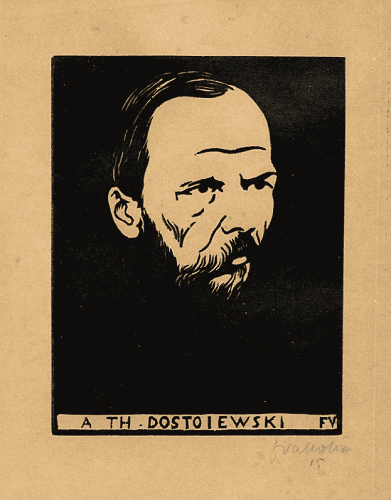
I just finished reading Leo Tolstoy's A Confession. One of the most
beautiful books I have ever read. Definitely making my Godchild (if any) read that.
[2025-06-05 Thu 16:08] ينهي تولستوي الاعترافات بحلم جميل. لا أعرف كيف لم يتحول لفيلم. يقول في نهايته
"ثم تيقظت." ويختتم كتابه وكلامه. ثم تيقظت.
All this was clear to me, and I was glad and calm. And someone seems to be
saying to me, “Watch, remember.” And I wake up.
إن قراءة هذا ليبث في جسدي القشعريرة. كثيرًا ما تمنيت لو كان لي أحد المناهج
الثابتة التي ذكرها تولستوي في كتابه، والتي كما يبدوا أنه استطاع، وإن كان في
نهاية الأمر، أن يلزم نفسه بواحدٍ منها. منهج ديكارت موجود على صفحتي الرئيسية ولكني
سأكون كاذبًا لو قلت إني قدرت على الالتزام به لأكثر من ثلاثة أشهر. إني كما يقول
سورين:
One moment a child, the next an old man; one moment you are thinking most
earnestly about the most important scholarly problems, how you will devote your
life to them, and the next you are a lovesick fool. But you are a long way from
marriage
I was never interested in Kierkegaard's personal life. Today I read this:
Kierkegaard told Emil Boesen, a friend since childhood, who kept a record of his
conversations with Kierkegaard, that his life had been one of immense suffering,
which may have seemed like vanity to others, but he did not think it so.
I downloaded his biography. Very interested to learn more about the man's life. #Kierkegaard
Government debt in the United States serves specific political and economic functions
beyond mere financing. The federal government currently borrows approximately two billion
dollars daily to sustain its operations and obligations.
When administrations cut taxes for the wealthy while simultaneously increasing spending,
they create deficits that must be financed through borrowing - often from the very same
wealthy individuals and institutions who received the tax cuts. This creates a system
where, instead of collecting adequate taxes from the affluent, the government borrows
from them and commits future generations to repaying these loans with interest.
The national debt, now in the trillions, is effectively owed by the general
population to a small group of wealthy creditors. This arrangement functions as
an upward redistribution of wealth - ordinary citizens must service this debt
through their taxes, while creditors receive guaranteed interest payments.
Furthermore, large deficits and debt become convenient justifications for
cutting social programs. When budgets need balancing, the cuts typically target
"non-essential" services like infant feeding programs, disability insurance, and
other social safety nets rather than military spending or corporate subsidies.
The debt system thus serves dual purposes: enriching creditors through interest
payments while providing political cover for dismantling public services.
Carl Jung, “The Love Problem of a Student,” in Civilization in Transition
(Princeton: Princeton University Press, 1978, vol. 10 of the Collected Works),
§§231-2, 111-112:
. . . Love requires depth and loyalty of feeling; without them it is not love but mere caprice. True love will always commit itself and engage in lasting ties; it needs freedom only to effect its choice, not for its accomplishment. Every true and deep love is a sacrifice. The lover sacrifices all other possibilities, or rather, the illusion that such possibilities exist. If this sacrifice is not made, his illusions prevent the growth of any deep and responsible feeling, so that the very possibility of experiencing real love is denied him.
Love has more than one thing in common with religious faith. It demands unconditional trust and expects absolute surrender. Just as nobody but the believer who surrenders himself wholly to God can partake of divine grace, so love reveals its highest mysteries and its wonder only to those who are capable of unqualified devotion and loyalty of feeling. And because this is so difficult, few mortals can boast of such an achievement. But, precisely because the truest and most devoted love is also the most beautiful, let no man seek to make it easy. He is a sorry knight who shrinks from the difficulty of loving his lady. Love is like God: both give themselves only to their bravest knights.
Henry David Thoreau, Journal, March 31, 1852 (emphasis mine):
Why the moaning of the storm gives me pleasure. Methinks it is be cause it
puts to rout the trivialness of our fair-weather life and gives it at least
a tragic interest. The sound has the effect of a pleasing challenge, to call
forth our energy to resist the invaders of our life's territory. It is
musical and thrilling, as the sound of an enemy's bugle. Our spirits revive
like lichens in the storm. There is something worth living for when we are
resisted, threatened. As at the last day we might be thrilled with the
prospect of the grandeur of our destiny, so in these first days our destiny
appears grander. What would the days, what would our life, be worth, if some
nights were not dark as pitch,—of darkness tangible or that you can cut with
a knife? How else could the light in the mind shine? How should we be
conscious of the light of reason? If it were not for physical cold, how
should we have discovered the warmth of the affections? I sometimes feel
that I need to sit in a far-away cave through a three weeks' storm, cold and
wet, to give a tone to my system. The spring has its windy March to usher it
in, with many soaking rains reaching into April. Methinks I would share
every creature's suffering for the sake of its experience and joy. The song
sparrow and the transient fox-colored sparrow,—have they brought me no
message this year? Do they go to lead heroic lives in Rupert's Land? They
are so small, I think their destinies must be large. Have I heard what this
tiny passenger has to say, while it flits thus from tree to tree? Is not the
coming of the fox-colored sparrow something more earnest and significant
than I have dreamed of? Can I forgive myself if I let it go to Rupert's Land
before I have appreciated it? God did not make this world in jest; no, nor
in indifference. These migrating sparrows all bear messages that concern my
life. I do not pluck the fruits in their season. I love the birds and beasts
because they are mythologically in earnest. I see that the sparrow cheeps
and flits and sings adequately to the great design of the universe; that man
does not communicate with it, understand its language, because he is not at
one with nature. I reproach myself because I have regarded with indifference
the passage of the birds; I have thought them no better than I.
This is probably one of the funniest debates ever. I bet Perle was actually
surprised by some information provided by Chomsky, "I worked at the state for
years why nobody told me about that".
(01:01:43) "If you want to know what I have in mind, it is very simple: independence."
I wrote about the Industry and Consumption of Pornography a while ago. Today I learnt that Jean Baudrillard has a related theory(Lenoir 2023, p.45) that reminded me of the Social Learning theory in the sociobiological theories of rape: Jean Baudrillard wrote the following maxim: "Sexuality does not hide in tolerance, repression, or morality, it is certainly hidden in what is more sexual than sex itself: pornography." In Baudrillard's view, the global success of pornography is not a result of sexual liberation but rather the triumph of capitalism, which turns everything into a commodity, including bodies that lose their ability to enjoy and experience desire. Hans Blüher continued where Baudrillard’s works left off and tried to show that the transition from sexual desire to pornography marks the boundary of the "unforgivable violation" with absolute permission—driven immediately by the urge to fulfill expectations and fantasies. This, he claims, signals the end of otherness in sexual and romantic relationships. The body of the other is consumed and discarded as if it were a consumable and disposable object. The desire for the other becomes a desire for oneself alone. We now strive for comfort, safety, and ease in the field of unity and isolation. Today’s love is free of all excess and all sin (…). Eros aims for the other in an emotional sense, yet does not allow itself to recover in the system of the self. In this identical, increasingly homogeneous society, contradictions no longer exist, and hence no erotic experience. This assumes a state of both internal and external dissonance.
References
Frederic Lenoir (2023). Philosophy of Desire. Dar Al Saqi.
I found an interesting piece by Leo Tolstoy: marxists.org/archive/tolstoy/1… on wage labor: Slavery exists in full vigor, but we do not perceive it, just as in Europe at the end of the Eighteenth Century the slavery of serfdom was not perceived. People of that day thought that the position of men obliged to till the land for their lords, and to obey them, was a natural, inevitable, economic condition of life, and they did not call it slavery. It is the same among us: people of our day consider the position of the laborer to be a natural, inevitable economic condition, and they do not call it slavery. And as, at the end of the Eighteenth Century, the people of Europe began little by little to understand that what formerly seemed a natural and inevitable form of economic life-namely, the position of peasants who were completely in the power of their lords-was wrong, unjust and immoral, and demanded alteration, so now people today are beginning to understand that the position of hired workmen, and of the working classes in general, which formerly seemed quite right and quite normal, is not what it should be, and demands alteration. #Modus Vivendi #What is it to be done?
It's been said we are in the age of pricing. The Age of Commodity. I had a lot of thoughts about that when I was reading this paragraph from Harper's review (“Were all going to be dead soon.”): In the United States, it was reported that the Microsoft founder Bill Gates, the world's twelfth-richest person, secretly gave $50 million to an organization supporting the campaign of the Democratic presidential candidate; and that the Tesla and SpaceX co-founder Elon Musk, the world's richest person, had been warned by federal prosecutors of the potential illegality of his practice of giving $1 million each day to a randomly selected swing-state voter who signed a petition for his super PAC that backs the Republican presidential candidate. 1234 In Moldova, where last month it was reported that the Russian government had paid at least 130,000 people more than $15 million to vote against joining the European Union, authorities announced that they had identified an additional $24 million also directed toward purchasing the votes of 20 percent of the entire electorate; violence erupted at polling stations across the country of Georgia, where international observers warned of Russian “vote-buying” in its parliamentary elections and whose president said that the elections' results “cannot be accepted” and should be opposed with protests in the streets; and police in Mozambique shot and killed at least ten of the thousands of demonstrators marching against the ruling party's claim that it had just won more than 70 percent of votes nationally. 56789 Days before Uzbekistan's parliamentary elections, a would-be assassin fired five bullets at the car of the country's former head of communications, who was lobbying for reforms to protect press freedoms; and in Bulgaria, hackers published a list of more than 200 businessmen and government officials who are alleged to have bought votes under the direction of the former owner of 6 of the country's 12 largest-circulating newspapers. 101112 It was reported that an internal battle in the Iranian government over the 85-year-old ayatollah's successor would likely be won by his second son, a former de facto commanding officer in the Basij who was accused of rigging the 2009 election in favor of the incumbent, who later accused him of embezzling money from the treasury; the Vietnamese parliament elected a military general to replace its president, who, while being investigated for bribery, resigned from the presidential office he'd taken over from his predecessor, who himself had resigned after 539 of his subordinates were implicated in multiple corruption rackets; and Tunisia's incumbent president, who last month arrested dozens of members of the nation's largest opposition party, was inaugurated for a second term. 131415161718 “Vipers,” he said at his swearing in, are “circulating.” 19 #Politics
CLOCK: [2026-05-02 Sat 21:38]–[2026-05-02 Sat 22:05] => 0:27
Suppose that A blackmails B: “pay me £5000, or | will release incriminating
photographs of you.”
It is not illegal to release the photos.
It is not illegal to unconditionally threaten to release the photos.
It is not illegal to request money from a person.
Yet the conditional threat to release the photos, unless money is provided, is
illegal. This is the paradox of blackmail. Why should blackmail be illegal,
when its components are legitimate?
Blackmail is not extortion. In blackmail, A threatens to perform a /awful act
that would bring about negative consequences for B, unless B provides some
benefit for A. In extortion, A threatens to perform an unlawful act that would
bring about negative consequences for B, unless B provides some benefit for A.
It is easy to explain why extortion should be illegal, since threatening to
perform unlawful acts is illegal. But there is no general problem with
threatening to perform lawful acts.
In fact, blackmail gives B a better case. Compare:
A makes an unconditional threat to B: “I will release these photos.”
A makes a conditional threat to B: “I will release these photos, unless you
give me money.”
If you were B, you would prefer to be in the second case. By making a
conditional threat, A provides you with options (both of which are in themselves
legal). If you take the deal, then you become the beneficiary of A, since you
prefer the information to be in the hands of A alone.
The second paradox: B discovers that A is intending to release compromising
photos, then contacts A and offers him money in exchange for destroying the
photos. This is bribery, and is legal. It is legal for B to make the offer and
legal for A to accept.
Why is this legal, but blackmail is not? Blackmail is the same exchange, only
initiated by A. Why does the legality of selling secrecy depend on who initiates
the act?
A labour union threatens a strike unless a better pension deal is provided for
its members,
“If you do not accept this deal, we will withhold our labour.” A protest group
that threatens a boycott unless a company changes their practices,
“If you do not stop supporting this political candidate, we will protest outside
your stores.”
What is the relevant difference between hard bargaining and blackmail?
I told some people before about my conspiracy theory of Google making Chromium development experience completely difficult, requires many adhocs setups, extremely slow and difficult to fork it to customize the interface/behavior, as a purpose of them trying to limit the possible Chrome clones. I'm now considering that AWS (Amazon) is making services like CloudWatch so terrible to search and trace, so you have to use something much more expensive like Live Tail. I'm aware that such a behavior is common in product design, some apps will be more feature-rich on the mobile app rather than on the web interface (usually because the app is more profitable, data-collection-wise), but it's an interesting instance to see such a usage with cloud providers. #Programming
18:27 Abdel Wahab al-Messiri, Paul Fussell and Kagi
[2025-10-24 Fri 13:29] Found a video of Messiri talking about his model and the incident. youtu.be/qs7Dp8ckFO8
[2024-10-17 Thu 18:27]
I was reading Messiri's "Rehlati al-fikriah", and he mentioned something very interesting there about Paul Fussell, the renowned literary historian, apparently he was one of his PhD external examiners. But that's not the interesting thing, it is what he mentions about him: being a homosexual pervert. I was shocked from the information that Messiri mentioned about him, that I quickly jumped to Wikipedia searching for anything with the keyword "gay", "homosexual", etc.. Nothing (surprisingly) was there, I started to think that Messiri might have linked to some other Paul Fussel. I then tried to search Google with keywords like "homosexual" "Paul Fussel", still, nothing there. I was finally certain that either Messiri is talking about someone else, or this information were discrete. Then I read a post on HN that was talking about Kagi, a less screwed (suckless) search engine, it quickly linked me to the information Messiri mentioned about Fussel (his wife article about their relationship and how he would like to enter a room full of guests naked) youtube.com/watch?v=wnacdOIoTB… I don't frequently post here, or anywhere, unlike past times. Lately I explored one of my friend's music library, he told me how it's extremely diverse, he was correct about it. I later wondered if that has anything to do with a disorder that he suffers from, which relates to his ear. I wonder if how his music changes has anything to do with how that acoustic disorder affect his music taste. I also wondered if there's anything about me that affects my frequency of writing here. Sometimes it's fascinating —even if you believe in free will— how unfree we might be. How we might have the wrong ideas because the search engine chooses not to be helpful enough, or have different views due to a biological state. Related.
I'm reorganizing my bibliography, found out that there are many titles that I felt
nostalgic towards. Many titles are related to people I used to discuss with or phases in
my life. Some of them are:
In Praise of Idleness and Other Essays (Russell, B.)
one of the very first books I've
ever read.
The Hero With a Thousand Faces (Campbell, J.)
I really miss that era of exploring
Campbell and psychoanalysis… used to be in a very fun communities.
The Human Web (McNeill et al.)
It was a very hard job for me to get a paper version
of this book, I remember reading it in public transportation, in winter.
Being Mortal (Gawande, A.)
Same as previous one, I read it in the same era.
The Naked Ape (Morris, D.)
I've some of the dearest memories with this book. I
remember recommending it to somebody, they were too shy to discuss the sex chapter and I
found that funny, we never talked or met again.
Your Inner Fish (Shubin, N.)
one of the first books ever that I read about evolution,
recommended to me by my neighbor after he saw the documentary.
My first book to read by Freud, first book to get me very
invested into the psychoanalysis theory as well. I even made infographics for this
book. It also introduced me to many other European orientalists.
Group Psychology (Freud, S.)
Second book to read for Freud, was recommended to me by
the same friend who recommended "Your Inner Fish".
Differential Equations for Dummies (Holzner, S.)
very bad memories with this one.
Algorithms (Sedgewick, R.)
This was my alternative for the common algorithms
reference, I don't even remember the name of that reference anymore.
Data Structures and Algorithm Analysis (Shaffer, C.)
My first algorithms book, one of
the books that I completed 100% of it. I truly loved it, I had a TODO note to thank the
author, but I never did.
So many other memories with the rest of the list! خُلِقتُ أَلوفاً لَو رَحَلتُ إِلى الصِبا لَفارَقتُ شَيبي موجَعَ القَلبِ باكِيا.
[2025-05-23 Fri 17:26] Sometimes I wonder whether that feeling is healthy.
DONE
21:12 Chomsky Story with his first book @check
Warner Brothers shut down an entire publisher that they owned and destroyed almost all their stock, just to prevent Noam Chomsky & Edward Herman from publishing a book critical of US foreign policy:
Well, unless you’re a very rare person you never saw that book. And the reason was that when the advertising for the book appeared, after 20,000 copies were published, one of the executives of Warner Communications saw the advertising, and didn’t like the feel of it, and asked to see the book, and liked it even less, in fact, was appalled. And then followed a- an interaction which I won’t bother describing, but the end result of it was that the parent company, Warner Communications, simply decided to put the publisher out of business, and to end the whole story that way.
More of that on: Wikipedia. Chomsky used this in his famous analogy of how the elite state has the just different tools than a dictatorship state when it comes to media, in this context he was comparing this incident with the Irani regime response to Rushdie's novel back then. #Chomsky #The limits on the (allowed) freedom of speech
I really like Stanford Encyclopedia of Philosophy's PDFs (preview here), however, they do not allow you to download it without a subscription. It's actually good enough for a subscription if you compare it to the HTML. For someone like me, my HTML appetite can not hold more than few long articles, SEP average entry is about 50 pages or so, that's not a long article even. Here's how I get their entries as nice PDFs without subscription, simply save the article part of the HTML page into a file, and using pandoc run: vpandoc concept_of_religion.html --pdf-engine=xelatex -o concept_of_religion.pdf --variable=documentclass:book -V geometry:b5paper -V margin=3cm -V mainfont="Times New Roman" #Philosophy
In industrialised nations, more than 90 per cent of our time is spent inside
buildings and vehicles, many of them constructed with synthetic products. This
statistic has entirely flipped during 300,000 years of Homo sapiens' history
– we once spent at least 90 per cent of our time outside. The modern indoor
lifestyle has adverse effects on our physiology, mood, circadian rhythms, and
even our microbiome, because industrial building materials do not provide
exposure to the bacteria we co-evolved with. (A healthy, diverse microbiome is
important for maintaining a healthy immune system and metabolism.)
It is easy to address this problem because any routine activity can be
deliberately moved outside. Choose to sit on the café patio while getting coffee
with a friend. Take phone calls while on a neighbourhood walk. If you work with
a laptop, you can bring it anywhere. I've been known to work from a low-hanging
tree branch! A park bench or picnic table near a local pond can be an attractive
place to get your daily dose of vitamin D, fresh air, microbes and bird song,
and will give you a live landscape to train your eyes on during breaks (this
helps prevent myopia or worsening myopia).
Participants in a study who spent four days in the wilderness without access
to technology demonstrated improved cognitive skills and creativity.
Numerous other studies have demonstrated that time in natural settings
improves mood, cortisol levels, blood pressure, pulse, immune response and
overall happiness.
So, spend free time regularly in the most wild natural settings you can find,
especially if you live in an urban area, which tends to increase overall
stress levels in residents.
Research suggests significant benefits can arise from spending just two hours
per week in wild settings. I'm fortunate to live in the woods but, when I
visit urban areas, I always make a point to go walking in nearby parks, or
make stops at open spaces when travelling by car.
#Modus Vivendi

 I just finished reading