vita nouva / diary
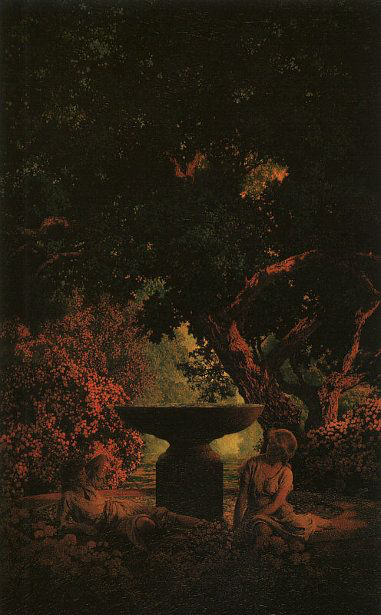
"The Rose Garden by Carl Aagaard"
19/12/2025

Hello! Long time no write. Or not rally?I might look like I’m actively writing at my blog, but to be frank, this blog is auto-generated from a Zettelkasten org-mode system. I remember having an incident that a friend of mine reported finding something embarrassing at my website, I immediately deleted it, when he asked why I put it there at the first place I got to explain how I don’t actually maintain any web pages in their own, all of them gets generated automatically from a set of rules. In that case; my rules were not strict enough to skip some media1.

After my last post about naming conventions, I got an email from someone that I know well in the Emacs community (from his contributions not personally) and he suggested if I take over lr0.org, that he happens to own, since I already use that handle everywhere.

I said that I will be happy to. I didn’t know what to do with the domain but I thought I could find something useful for it more than just migrating my blog. I was showing Menna some ideas in neocities recently and I told myself why not let it be the finally web garden that I was always missing. And here we are.. I will try to move personal blogs that has nothing to do inside the zettelkasten to be here instead.


  1. Funny enough one of the principles of maintaining a Zettelkasten is to make it “private”. This shouldn’t happen at the first place ↩︎

[permlink]
09/12/2025

I had the first I met with Tony Marston <https://www.tonymarston.net> on the Internet was on Dec 2024, when I read his 2018 "Why I don't do Domain Driven Design", I found it a bit strange post, but in a good way (what I believed back then), I thought it's an enjoyable discussion, so I post it on Hacker News and it was discussed a bit there. I never met with Marston again, but I learnt that he had some radical, sometimes ridiculous, views. But how doesn't, right? Couple of days ago there was a discussion on GitHub about Object-Oriented Programming, I was not investing a lot of effort there pointing out my views, because it was obvious to me that the opponents are not distinguishing between "encourages", "allows", and "emphasize" bad practices1. Someone replied to my comment there, I didn't pay a lot of attention once they mentioned that inheritance and encapsulation magnified their productivity. "you lost me after "inheritance". It sounds like you have no idea of how bad code looks like" I wrote. I got a very strange response from their side, projecting, and just bizarre. "If my code is THAT bad, then why has it won numerous awards? If you think YOUR code is better than mine then take this challenge to prove it."2, the bottom line was "Note that in all cases I was using a development framework that I had designed and built myself. How many frameworks have you written?". I was just speechless at this moment when I read the email. I couldn't response, when I browsed some of the website, I realized this was Tony from the DDD article, but the rest of the website and content was not pretty at all, it felt like I went into a limited intelligence 70 years old elder who was a lot into programming. I've shown the commend to some of my friends who couldn't take it seriously at all, especially the "how many frameworks", one posted it on r/programmingcirclejerk. The people there had more tolerance than me to look at Marston's world, and some made deeper investigations: "Let me explain something. There's a guy who writes code. He claims he can create in PHP in 5 minutes what would take 5 days to create using COBOL. He creates a product. He gets a letter saying his product has been nominated. The organization that gives out the prizes has a Twitter account without any announcements and a simple website that clearly states that participation is free. But to get the award and beautiful photos - you have to pay. Oh, and you won't find a list of nominees or a list of who received their award on their website. This guy writes that his anon fans nominated him, but I wouldn't be surprised if this organization itself creates spam mailings. I think it's even a little sad. Stupidity and self-confidence are a terrible combination. This guy seems to be losing touch with reality. Sad…", I opened Marston's reddit profile, first glance was -100 karma, I know reddit its awful but really how bad you need to be to get to -100? I found that the guy is just ragebaiting3 the whole PHP community, getting roasted over and over and over. Some dude wrote on a comment "You just HAVE to look up this guy's website and previous discussions both here and on Sitepoint. You'll be entertained for hours.", although of all this continuous criticism and even bullying of the guy, he is so rude and arrogant, let alone stupid. I just feel sad for this, what it takes for someone to be like this? "When I read this, I imagined how David Lynch (RIP) would film it: a developer tries to start working but IDE is not installed on his computer. The developer takes a desperate step and tries to download and install IDE himself, but it turns out that IDE is already installed, it's just that its shortcut is not on the desktop. As if everything is not so bad, but the next moment he launches Vi… Panic, the clock on the wall starts ticking loudly. The developer calls his colleagues and asks for help but hears loud laughter in response…" ‒ BenchEmbarrassed7316.


[permlink]
28/11/2025

Last Wednesday I was celebrating my last working day (before starting my short vacation and moving on) with my coworker, he suggested that we can do it around the workplace, which happens to be a common open-air outing for the Egyptian middle to upper-middle classes. It was quite fun.

As we walked around, I noticed dozens of Christmas trees scattered across which felt oddly dissonant. Familiar, but still entirely out of place.

I understand why I'm writing this blog in English, and why I can relate to European drama more than I can to my local ones; English is lingua franca, and I was exposed to foreign culture more than I was to my local one. But what I don't understand is this strange eagerness to inherit symbols that were never ours. I found a lot of Christmas trees at work yesterday. I think they were the usual Picea abies, a tree that has never grown naturally in the landscapes of the Middle East: not in our deserts, not along our Mediterranean coastlines, not even in the highlands. Even Middle Eastern Christians, for nearly two millennia, never practiced this tradition; it spread only recently through the soft power of American and Northern European culture. The tree itself has origins in pre-Christian pagan rituals of northern Europe, symbols of winter vitality adopted and reinterpreted over centuries, yet we imported it without the mythology, without the climate, without the story.

The same happens with Halloween, a Celtic festival marking the thinning veil between worlds, reshaped by Irish immigrants in the US, and then exported back to the globe through a cultural gravity the MENA region was never meant to orbit. It’s not that these borrowed traditions are wrong; they are simply unrooted. They give the illusion of participating in a universal culture while quietly eroding the questions that shaped our own. Perhaps the real issue is that we’re adopting symbols that grew from someone else’s winters and someone else’s fears.

My biggest issue, though, is that I cannot find authenticity in this or enjoy it, because it feels totally engineered by media. Perhaps I would find it fun if I were born in the US (even as a Muslim, in fact some people in Egypt attributed my thoughts about these events to radical Islam, it has nothing to do with it. I would celebrate an authentic Egyptian holiday for instance), for example. Experiencing it from here, however, feels like watching someone else’s memory and pretending it’s mine. It makes me wonder whether culture today is something we choose or something curated for us, shaped and streamlined until we mistake repetition for belonging.

When every tradition can be packaged into a trend, it becomes difficult to tell where genuine fascination ends and subtle social engineering begins. If a ritual becomes universal through marketing rather than meaning, does it still count as culture, or is it simply a very successful advertisement?

At what point do we stop being participants in culture and become mere receivers of whatever is most efficiently broadcast? #Egypt #Modus Vivendi

[permlink]
25/11/2025

I don't think I ever got to talk about much I hate Microsoft. I will use this post to express how much I hate Microsoft.

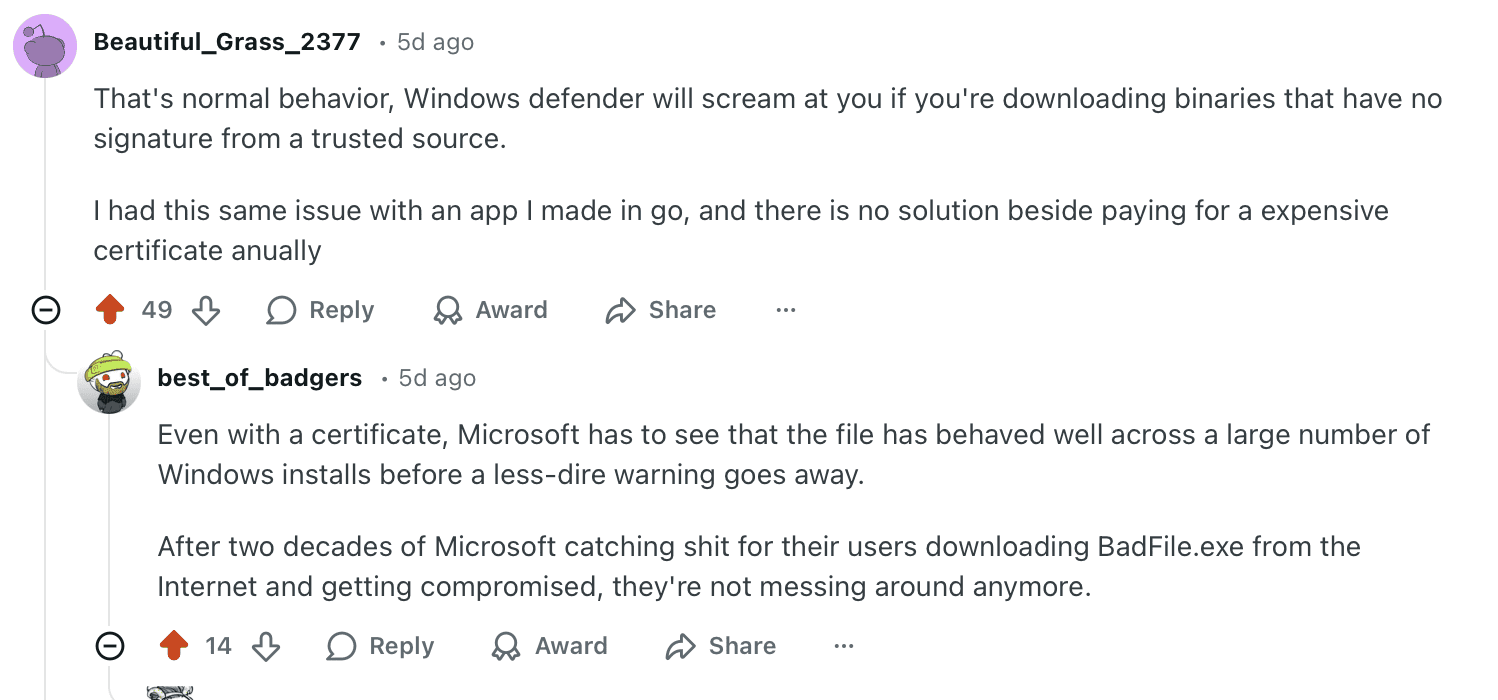
I'm pro-FOSS and pro-Freedom, however, people who know me know that I do hate Apple and other big tech, but just not as much as I hate Microsoft. I believe that Microsoft is responsible for making one of the most terrible operating systems ever (along with other many low quality products) which was (is?) responsible for making the computing experience really terrible for people who are not much into computing. This resulted in making every task that might require using a computer a burden to these people.

I'm not talking about power users or developers who can work around Windows' quirks (like removing copilot or using the server version of Windows 10 for their desktop). I'm talking about your aunt who needs to send an email, the small business owner trying to manage inventory, the teacher preparing a presentation. Microsoft took what should have been straightforward tasks and wrapped them in layers of mysterious failures, cryptic error messages, and mandatory restarts.

The real issue isn't that software has bugs, every system does. The real issue is that Microsoft built an operating system that treated its users with contempt. Windows 95 through Windows 11 trained an entire generation to believe that computers are fundamentally unreliable, that losing work is just part of the deal, that random crashes are inevitable.

They normalized dysfunction. Microsoft convinced the world that computing is inherently fragile and frustrating.

Modern Windows is an archaeological dig. You've got Control Panel coexisting with Settings, two different interfaces for system configuration because Microsoft couldn't commit to either. You've got ancient Win32 APIs next to WinRT next to whatever they're calling the current framework (and don't get me started at how they name it). Each generation of Windows just changes (or contributes to) how terrible the experience is.

This matters because it destroys predictability. In any well-designed system, once you learn the patterns, you can reason about how things should work. Windows teaches learned helplessness. Settings might be in Control Panel, or Settings, or a right-click menu, or a PowerShell command, or not exposed at all, or in some registry, or in a file under System32 folder. Every task becomes a treasure hunt.

People who defend this as "backward compatibility". It is not. Backward compatibility is running old binaries. This is keeping decades of UI confusion and architectural mistakes on life support because Microsoft can't be bothered to make clean breaks1.

Microsoft normalized the idea that computers need to be rebooted to function properly. Not rebooted to apply updates, that's reasonable. Rebooted because something got into a weird state and nobody knows what. Rebooted because that's just what you do when Windows acts up.

This became the universal tech support answer because it actually worked disturbingly often. That's not a feature, it's an admission that the system's state management is so broken that burning it down and starting over is easier than debugging.

Servers running Linux or BSD regularly go years between reboots. macOS machines might reboot for major updates but rarely for anything else. Windows? "Have you tried turning it off and on again?" became a cultural meme specifically because of Microsoft's inability to build a stable operating system.

Microsoft had the resources and market position to build something genuinely excellent. They built something barely adequate and spent decades defending it. They trained the world that computing is supposed to be painful.

That's why I hate Microsoft more than Apple or Google or any other tech giant. Apple locks you into their ecosystem, sure. Google vacuums up your data. But Microsoft convinced generations of people that computers are fundamentally hostile tools that barely work. They normalized dysfunction at a scale that damaged the entire industry's relationship with its users.

Propaganda

Here's some anti-Microsoft propaganda that I like

  1. Microsoft won't let me pay a $24 bill
  2. Update from Microsoft
  3. Microsoft's Software Is Malware
  4. Microsoft lacks quality control
  5. Why is Microsoft Teams still so bad?
  6. Why is GitHub UI getting so much slower?
  7. Casey Muratori incident
  8. Microsoft is going to preload it in the background, because it's slow
  9. Markdown files not openable because of GitHub Copilot
  10. It's over
  11. STOP. please microsoft
  12. Microsoft keeps losing
  13. Why does Microsoft never improve?
  14. Windows 11 Start Menu Revealed as Resource-Heavy React Native App
  15. Microsoft Recall Required??
  16. Migrating from GitHub to Codeberg
  17. New Windows 11 bug causes flash bang when opening File Explorer
  18. Microsoft Is A Blackhole Of Talent And Money
  19. The Cult of Microsoft
  20. Microsoft, anybody home?
  21. [2026-01-08 Thu 17:06] People are calling Microsoft now "Microslop" I would like to denote that AI/LLMs (Or like how the GNU priest calls them, bullshit generators) have absolutely nothing to do with how mediocre, low quality and buggy MS products are. People that believe so, usually haven't interacted with MS products a lot before LLMs regulations, or they didn't find the buggy software before buggy, and they only got to realize it when the scale of bugs increased when they depended more on LLMs. Google uses LLMs, Apple did too. They got mistakes as well, but MS's issues are more about a philosophy rather bugs.
  22. [2026-01-05 Mon 21:26]
    Adding:

  23. [2026-01-06 Tue 08:57]
    Microsoft is renaming all their products https://x.com/IceSolst/status/2008279151782830207
  • [2026-02-07 Sat 18:34]
    I don't want to start even talking about the development experience on Windows. ../i/2026-02-07_18-35-09_screenshot.png

Footnotes

[permlink]
21/11/2025

Unsure when I will be able to read my old journal, bravely. I had this in my daily TODOs: "Run salih/org-search-entries-with-today-date and salih/open-journal-file-for-today". these were elisp functions that were showing me my log and journal for the same day of the current month, but for past years. Sounded like a fun idea at first, but it started to get extremely gloomy after couple of days, then weeks. Then I completely stopped doing it because it really harmed my mood. I rescheduled the activity to the far future, hopping that better me will be able to handle his feeling appropriately. He will probably come through this note in November's 21st, I hope he will be glad.

[permlink]
15/11/2025
  • [2025-11-26 Wed 15:52]
    Reading https://ieeexplore.ieee.org/document/7832935/ today. It mentions that most common uses of catch: 1. Logs the error rather than recovering from it 2. About 80% of people are using the common "Exception" class, rather than their subclasses.

I wrote about exception handling before in my draft on programming languages, generally, I consider exception handling to be extremely distasteful, and before you relate this to me being biased toward functional states, no I had this feeling from the first day writing C#; I was always astonished by how the MS documentation was strictly telling us "hey be careful with this thing" and hopping for the best, and for the way my app needed a "global exception handler" that swallows everything, and I looked and looked for a way in which I could just know whether a function throw or not, I assumed that I'm getting something wrong, because I couldn't believe that this is a standard practice and due to my insufficient experience back then, I couldn't find any literature discussing this problem. I wrote about a similar concern in my old mentioned draft, but it's far from complete in the regard of why throwing exceptions is generally a terrible idea. Here I'm sharing some of contributions that I found: 1. Exception Handling Considered Harmful1 2. 13 – Joel on Software 3. Exceptions Considered Harmful 4. Why Go gets exceptions right | Dave Cheney. From the other side: 1. You’re better off using Exceptions – Eirik Tsarpalis' blog and I have a quick response for some issues it demonstrates; a. An Awkward Reconciliation: this assumes that the programming language you are using, library or other called functions are going to throw, which is invalid if you can never have this state in your language. b. Boilerplate: this is a style preference IMO, most of Go developers for example do not mind the infamous if err != nil for me it's explicit and eloquent. c. Where’s my Stacktrace?: exporting the Stacktrace has nothing to do with throwing exceptions, it's very possible to expose it in almost all languages (including Go) without exceptions. 2. Exceptions vs. status returns | Ned Batchelder2. #Programming #exception handling


[permlink]
14/11/2025

Just wanted to say that I love https://photos.nwalsh.com/. I contacted Norm a year ago: "Hi Norm, I really enjoy browsing through your gallery https://photos.nwalsh.com/images/ndw I would like to build something similar, is the software that serves the website available for others to use? Thanks in advance." he responded: " I’ve reimplemented that a couple of times. I don’t think I ever published the current incarnation. It’s Node.js on the front and Postgresql on the back, so pretty standard stuff. I’ll put “package it up in a public repo” on my todo list, but it’s a long, long list. :-) Be seeing you, norm". I responded: "Thanks. If possible, please let me know if you release it someday. That might be a fit for an additional line in your todo :).". He responded: "I’ll try to remember. To be honest, if I was starting over today, I’d be looking hard at setting up a Pixelfed instance. That might be worth exploring. Something for your todo list, perhaps :-) Be seeing you, norm". This was at Fri, 23 Aug 2024 13:50:01 +0100. I found his response fun. I added it indeed to my long TODO, and I consider pinging him in couple of months.

[permlink]
05/11/2025

Sometimes I develop feelings for books, scientific materials and tutorials. I wrote about this in Nostalgic Bibliography. One of the science books I had this experience with was Shaffer, C. Algorithm Analysis book. I wanted a lot to email Dr. Shaffer about how much I enjoyed his book, but I never found the best words, so I never did. Today I've noticed that I had the same feeling for Matt Holiday's <https://www.youtube.com/@mattkdvb5154> Go tutorial. I have a theory that he made this tutorial because he wanted to gain from time at home during the pandemic. Such a well spoken person and a great teacher. #Go and #Programming

[permlink]
03/11/2025

23:09

I still remember Aljazira's old Arabic UI very well, it was very alive, feature-rich, has a lot of surprises and just "alive". It was a portal to the internet. There are still snapshots of it in the Wayback Machine. I feel a lot of nostalgia for it.

[permlink]
02/11/2025

Most engineering disciplines have a distinction between "waiting" and "blocking". Usually waiting is purposeful and justified (an ongoing process we must await). On the other hand, blocking is usually seen as a symptom of poor design. Most of the waiting I experience is blocking.

Have you ever read the Wikipedia page about waiting halls? Yeah there does exist one, and I when I came through it for the first time I was more inclined towards questioning the existence of "waiting" rather than the existence of a Wikipedia page about waiting halls. But really, why do they exist? No one is going to tell you this, but it has nothing to do with "necessity" or waiting for something to complete (most of the time), it's actually because someone decided that their schedule optimization problem is more important than your time. They've overbooked, underestimated, or simply refuse to implement proper queueing systems with realistic estimates.

I'm sitting here right now, waiting for God knows what, and I've had enough time to think about how absolutely insane this is. When you have a thread just sitting there doing nothing while it could be doing work, you profile that and you fix it. It's a bug. It's inefficiency. It's the thing that makes your system fall over when you try to scale. But somehow when it's human beings sitting in lobbies or staring at "your call is important to us" screens, we just… accept it?

Think about what waiting actually means. When you wait, you're in a state of suspended agency. You can't move forward with what you intended to do. Your plans, your goals, your trajectory through time. All of it gets put on hold. You enter a kind of liminal space where you're not really doing anything, just existing in anticipation of permission to resume your life. And the thing is, sometimes this is unavoidable. Sometimes the universe itself imposes waiting on us. Seeds take time to grow. Wounds take time to heal. Understanding takes time to develop. This is legitimate waiting. This is waiting that corresponds to actual processes unfolding in reality, transformations that cannot be rushed because they're constrained by physics, biology, cognition. The actual fabric of how things work.

But blocking? Blocking is different. Blocking is when you're forced into a state of suspended agency not because anything meaningful is happening, but because someone, somewhere, made a decision about system architecture that treats your time as an acceptable sacrificial resource. Your waiting serves no purpose except to optimize someone else's convenience. Nothing is growing. Nothing is processing. Nothing is happening at all, really, except that you've been placed in a queue, not because the work takes time, but because the system wasn't designed to respect the temporal experience of the people moving through it.

Where it gets even more consciously uncomfortable to me is that, when someone makes you wait unnecessarily, they're making a claim about the relative value of existence itself. Because time isn't just a resource like money or attention, time is the fundamental substrate. It's the medium. When you take someone's time, you're not borrowing a thing they own, you're consuming a portion of their finite conscious experience in the universe. You're saying: the segment of your life that you're spending right now, the irreplaceable minutes of awareness and possibility that you have between birth and death, those matter less than my organizational convenience and my incapability of solving scheduling optimization problems of degree one.

This is a form of violence that's normalized so completely that it is not even seen anymore. We've built entire systems predicated on the assumption that some people's time is disposable, that it's acceptable to externalize the costs of poor design onto the subjective experience of whoever happens to need something. And the really insidious part is how it scales. One person making a thousand people wait for an unnecessary hour hasn't just wasted a thousand hours of labor, they've consumed a thousand hours of lived experience. That's weeks of conscious human existence, just… gone. Burned up in service of a system that could have been designed differently.

There's something almost Kafkaesque about it. You're trapped in a system whose logic you can't access, whose progress you can't observe, whose timeline you can't influence. You don't know if anything is actually happening. You don't know if you've been forgotten. You don't know if the wait will be five minutes or five hours. You're in a state of enforced passivity. The only thing you know for certain is that someone, somewhere, decided that this is fine. That your experience of temporal captivity is an acceptable cost of doing business. Waiting doesn't just feel bad, it's objectively wasteful. It's entropy in the system. When you force asynchronous processes to become synchronous, when you serialize things that could be parallel, when you create artificial bottlenecks that serve no functional purpose, you're not just making individuals miserable.

There's a kind of temporal injustice at the heart of modern institutional life, where waiting is distributed inversely to power. Those who can least afford to lose time, because they're paid hourly, because they're juggling multiple responsibilities, because they have the least slack in their schedules, are the ones who wait the most. While those who design the systems, who benefit from the efficiencies of batch processing and serialization, who optimize for their own convenience, barely wait at all. And the really maddening thing is that we have the technology to fix this. We know how to build systems that respect human temporality. We know how to make things asynchronous, to provide feedback, to eliminate artificial serialization, to let people opt in to waiting when it serves their interests rather than forcing them into it by default. We could design the world so that blocking is rare and waiting is transparent and people maintain agency over their own time. But we don't (and this has nothing to do with being cost-effective. I've been in highly funded institutions who suffered from the very same problem).

So here I am, waiting. Blocked by a system that doesn't need to block me, suspended in dead time that serves no purpose, my finite conscious experience being spent on nothing because someone, somewhere, decided that this was an acceptable externality. And I'm supposed to just accept it. To scroll on my phone, to read, to "be patient," as if patience is the appropriate response to unnecessary temporal captivity rather than rage at the casual disregard for human experience that blocking represents.

Most of the waiting we do is blocking. And blocking is a failure. Not just an inconvenience. It's a moral failure, a design failure, a failure to treat human consciousness as something worth respecting.

And we call this normal. We call this life. #Modus Vivendi

[permlink]

01/11/2025

I just noticed that there are some artists that I would 'love' listening to, but I feel to embarrassed looking them up (and I can't answer why, because there's really no obvious reason for this feeling for me), so I been doing something uncanny; I would open Apple's random selections for me (aka. station), start the playback, and hope that it will pass by that artist or that song at some point. #Music

[permlink]
29/10/2025

Some quick notes I had recently. 1. If you play Jeno Jando's performance of Hungarian Rhapsody No. 2 (C Sharp Minor, S244), and you listen really really cthat the experience is usually not very arefully to the part in which he starts with the famous friska, you can hear him humming. Which is very spectacular, in my opinion. 2 Dmitri Shostakovitch wrote about waiting in his journals. I don't have access to it right now and I can't rephrase it because I read it very long time ago. As of now (me writing this), he was correct about a lot of points. 3. Most engineering disciplines have a distinction between "waiting" and "blocking". Usually waiting is purposeful and justified (an ongoing process we must await). On the other hand, blocking is usually seen as a symptom of poor design. Most of the waiting I experience is blocking. 4. Everyday I walk myself into a state of well-being and walk away from every illness. I have walked myself into my best thoughts, and I know of no thought so burdensome that one cannot walk away from it [Soren Kierkegaard] 5. The world lost a lot from transforming the concept of playing from having joy and fun with others using tools and rocks, to sitting in front of a computer monitor staring at pixel dots. #Modus Vivendi #Music

[permlink]
25/10/2025

Discovered Ghada Ghanem this week, her music is really different and interesting. I was surprised this is my first time to stumble upon her. Her music in Arabic is very special, but sadly she only has couple of ones in Arabic. #Music

[permlink]
24/10/2025

13:30

I have never been asked this question, but I think it's extra scary. So scary that I think about it even I was not questioned. My problem with this question is simple; it does not only imply that you are being a disappointment and a failure, but it also tells about you that you are not responsible that you are still willing to produce, work, or go to the exam, even when you know you can not do your best, due to your presumed "back home" situation. It's a question of dignity too, not only performance.

20:17 Give me more build systems

Installing Zathura on OSX: ==> Fetching dependencies for homebrew-zathura/zathura/zathura: cmake, ninja, python@3.14, meson, certifi, sphinx-doc, freetype, pcre2, glib, libtiff, gdk-pixbuf, harfbuzz, pango, librsvg, adwaita-icon-theme, desktop-file-utils, dbus, libxfixes, libxi, libxtst, at-spi2-core, gsettings-desktop-schemas, hicolor-icon-theme, libepoxy, gtk+3, girara, intltool, json-glib, libmagic and gtk-mac-integration. Why is all that needed? Why do I need 3 build systems (ninja, cmake and meson) for a single software? #Programming

[permlink]
22/10/2025

I enjoyed this week of going through de Volpedo's art. It was very interesting. When I saw that he died before aging 40 I thought "greats die young", attributed his death to his life-style. Little I knew that he committed suicide. The Wikipedia page about him sneaks that information real quick "It seemed the beginning of a new period of favour, in which finally artistic and literary groups would recognize the themes of his work. However, the sudden death of Pellizza's wife in 1907 threw the artist into a deep depression. On 14 June of the same year, Pellizza hung himself in his Volpedo studio. He was not yet 40." His story with Giovanni Segantini is as equally tragic. I wonder if any media works, novels, or the like portrayed this tragic life of his. #Art #Pellizza da Volpedo

  • [2025-10-24 Fri 02:16]
    I tried to look for anything that documents his life or letters, but in vain.

CLOCK: [2025-10-24 Fri 02:14]–[2025-10-24 Fri 02:20] => 0:06

[permlink]
20/10/2025

Regarding: https://twitter.com/ohreallytruly/status/1491569252809117699; Years ago, a meeting between Noam Chomsky and Episten was highly discussed on the r/Chomsky subreddit. I didn't give it much attention because I know how Dr. Chomsky rarely does research of the people he conducts interviews with. However, doing some research now I can see that Episten was kinda of an octopus of connections. Apparently, Epstein had a lot of philanthropy work, worked with MIT professors, funded multiple universities and had met with many figures in the scientific and intellectual community, Chomsky just happens to be one of them more on that here. Regarding the funds, Chomsky explained that it was from his own money "In response to questions from the Journal, Chomsky confirmed that he received a March 2018 transfer of roughly $270,000 from an Epstein-linked account. He said it was “restricted to rearrangement of my own funds, and did not involve one penny from Epstein". Anyway, I think that Chomsky's personal life matters or should be associated in consideration of his ideas or works. #Jeffrey Episten #Noam Chomsky

CLOCK: [2025-10-20 Mon 21:04]–[2025-10-20 Mon 21:41] => 0:37

[permlink]
14/10/2025

There's that common idea in Nietzsche philosophy about how you can't really do good if you never get the authority, power and ability to do harm. "Of all evil I deem you capable: Therefore I want good from you. Verily, I have often laughed at the weaklings who thought themselves good because they had no claws". I'm reading currently about philosophy of consent, and the idea that power imbalance nullify consent, and I find many reasons to see Nietzsche's view of power here connected, yet no one is mentioning it in literature I found.

  • [2025-11-19 Wed 00:57]
    Jefferson-Hemings is a good example for this tension. Jefferson owned Sally Hemings i.e. literal "claws" in the form of legal authority to sell, punish, or kill her. His capacity for relative kindness (freeing their children, maintaining a relationship rather than disposal) was inseparable from his absolute power over her. But that same power makes consent impossible unde. The power enabling any "choice" simultaneously negates it.
[permlink]
09/10/2025

I care about naming. I wrote recently about how I hate the way Microsoft names its products (see here). Seemingly, Microsoft champions have the same issue. There's a common thing in the Microsoft Java++ (C#) ecosystem called "clean architecture". I still remember hearing the term from my coworker for the first time and I thought she was talking "clean" as in an adjective not a term. Why the hell someone would call a design pattern "clean", how clean is it? #Programming

[permlink]
01/10/2025

Is not this a true autumn day? Just the still melancholy that I love—that makes life and nature harmonise. The birds are consulting about their migrations, the trees are putting on the hectic or the pallid hues of decay, and begin to strew the ground, that one’s very footsteps may not disturb the repose of earth and air, while they give us a scent that is a perfect anodyne to the restless spirit. Delicious autumn! My very soul is wedded to it, and if I were a bird I would fly about the earth seeking the successive autumns. - Letter to Maria Lewis. #Literature #Modus Vivendi

[permlink]
30/09/2025

Today was my first day reading La Belle Dame sans Merci (poem) (wiki). I have seen the paintings before, but I never knew about the poem. It's amazingly beautiful. Here's a beautiful reading of it, and an amazingly poetic Arabic translation. #Literature #Art

[permlink]
28/09/2025

#The Romans in their Decadence I really like this painting a lot, but I fail to properly interpret it. Do you know a good interpretation? Share it in the email please (this applies also if you're reading this post in a distant future, I keep track of long old TODOs). #Art

[permlink]
27/09/2025

There's an uploaded video on YouTube on a channel that posts "unintentional ASMR"s, which are videos that can be used for an "ASMR purpose" but they were not intended to be so. One of these videos, is Chomsky speaking about surveillance. One commenter said: "If you actually listen to what he says, you won't get any sleep."

[permlink]
20/09/2025

I spent last night rewatching Cast Away. The last time I watched it was when I was lost, my perception about it was alike the one I had to other mainstream films that his return to life was not respectful to everyone around him (i.e. main character delima). What I could remember before my watch was something like that her wife either stays with her new husband, or she leaves her new husband for him, both are equally awful. But the ending doesn't show Kelly leaving her new husband. Instead, there's a bittersweet final meeting between Chuck and Kelly where they acknowledge their love for each other, but Kelly chooses to stay with her current family. Chuck ultimately lets her go and drives away to start his new life. The film ends with Chuck at a crossroads (literally and figuratively), suggesting hope for his future as he decides which direction to take. #Cinema

[permlink]
15/09/2025

Reading (Hall 2023). It has an interesting note for Windows programmers: "At this point in the guide, historically, I’ve done a bit of bagging on Windows, simply due to the fact that I don’t like it very much. But then Windows and Microsoft (as a company) got a lot better. Windows 10 coupled with WSL (below) actually makes for a decent operating system. Not really a lot to complain about. Well, a little—for example, I’m writing this (in 2025) on a 2015 laptop that used to run Windows 10. Eventually it got too slow and I installed Linux on it. And have been using it ever since. But now we have Windows 11 that apparently requires beefier hardware than Windows 10. I’m not a fan of that. The OS should be as unobtrusive as possible and not require you to spend more money. The extra CPU power should be for apps, not the OS! Additionally, Microsoft knows what you want, and what you want is more advertising! Right? In your operating system! Weren’t you missing that? Now you can have it with Windows 11. So… I still encourage you to try Linux , BSD , illumos or any other flavor of Unix instead of Windows.". It's a nice harsh punch for newcomers. I still think that MS Windows is one of the worst blocking obstacles in 21th computing. Perhaps one big factor that made mobile usage thrive they way it is, was the way MS made the desktop experience so bad, and the way Apple made it unaffordable. #Programming

References

  • Brian "Beej Jorgensen" Hall (2023). Beej's Guide to Network Programming. Link
[permlink]
13/09/2025

I was recently introduced to the concept Emacs Bankruptcy (EB) by this cool video from Jake B. I have done EB maybe more than 10 times, I never knew the term though. I'm currently in the process of doing another one, hopefully the last.

[permlink]
05/09/2025

These might sound extremely unrelated topics, and yes they are. Around 4 or 5 years ago I used to watch a YouTuber who started his channel with the pandamic, and I was learning some C# patterns then. He was making these nice videos about C#, and his way of explaining some topics was really fun. However, he started also giving some dating advices1, I stopped following him when he started doing all that dating stuff, but later he made a single one video on Ukraine war, it was about the tanks. The video went so popular and since then his channel got around 500K followers, I don't recall him making any videos again on tech or dating and I'm unsure if he even kept them. The reason why I'm talking about him (and sorry if it will disappoint you), is that he keeps popping into my mind every once and a while, and I totally forgot about him and his name, and the story sounds very unfamiliar that if I tell anyone about it they might not believe me. So I'm putting this here, if you know what I'm talking about, even if you're reading this 5 years later, let me know that I'm not the only person who remembers that strange phenomena. #Programming


[permlink]
03/09/2025

In ATLA, the episode S01E03 ends in a way that I just noticed it in a rewatch I'm makign now. Aang is realizing that the world he knew and loved is no longer there again for him, however, the realization is not there yet until he is saying goodbye to his home, flying away from it, looking at it and contemplating his memories that will never be revived again, and thinking of how it is going to be a very long journey in this new world he spawned into. How ironic that I watched this as a kid, with memories that I yearn everyday to revive, but will never be able to. It's really a spectacular scene. And a spectacular show.

  • [2025-09-06 Sat 15:03]
    I still wish I could learn how to be a good teacher like Iroh was. My exeperience has teached me that I'm terrible at teaching, not exactly at transfering knowledge (in which I believe I'm outstanding) but in keeping my temper when my students do not get what I'm saying, or do not apperciate it. We call this in Arabic Holm.
  • [2025-09-06 Sat 15:00]
    I learned a lot from this show as a kid. I learned responsability and sacrifice.
  • [2025-09-06 Sat 02:16]
    I'm rewatching the show slowley for the fisrt time now, and I'm realizing how absurd was the reason that made Katara hate Jack a lot. I always remembered him as her cheater ex-boyfriend who lied to her horribly. I even remember believing that he tried to trade Aang with the fire nation at least (that's how I was trying to understand why Katara hated him that much), founded that he just lied to her about destroying a settlement. I personally agree with views like his: there is no victories without some loses (can't make an omelet without breaking some eggs), and I think it was not that big of a reason to hate on Jack (well, maybe his dishonesty?). It's a bit sad that we had to live with a leftover like Jack in the show.
  • [2025-09-04 Thu 02:16]
    https://www.youtube.com/watch?v=_6FbPLEW_p4 I uploaded the scene.
[permlink]
27/08/2025

William Rounseville Alger, The Solitudes of Nature and of Man; or, The Loneliness of Human Life (Boston, Roberts Brothers, 1867), 122-24, 126: (emphasis mine):

The man who separates himself from mankind to nourish dislike or contempt for them, has in him a morbid element which must make woe. True content, a life of divine delight, cannot be attained through a sense of superiority secured by thrusting others down; but only through one secured by lifting ourselves up, by communing with the great principles of morality, contemplating the conditions of universal good, laying hold of the will of God. Whoso would climb over a staircase of subjected men into a lonely happiness, will find it misery when he arrives. To be really happy one must love and wish to elevate men, not despise and wish to rule them. There is nothing in which the blindness and deceit of self-love is more deeply revealed than in the supposition with which misanthropic recluses frequently flatter themselves, of their complete detachment from other men, their lofty freedom. Spatial separation is not spiritual independence. Of all men the man-hater is the one who is fastened to his fellow-men by the closest and the most degrading bond. Misanthropy, as a dominant characteristic, if thoroughly tracked and analyzed, will be found almost always to be the revenge we take on mankind for fancied wrongs it has inflicted on us, especially for its failure to appreciate us and admire us according to our fancied deserts. The powerful and savagely alienated Arthur Schopenhauer, who said that, in order to despise men as they deserved, it was necessary not to hate them, was embittered, almost infuriated, by disappointment in not obtaining the notice he thought he merited. He came daily from his sullen retreat to dine at a great public table where he could display his extraordinary conversational powers. He eagerly gathered every scrap of praise that fell from the press, and fed on it with desperate hunger. He sat in his hotel at Frankfort, in this age of newspapers and telegraphs, a sublimer Diogenes, the whole earth his tub. An apathetic carelessness for men shows that we really despise them, but an angry and restless resentment towards them betrays how great a place they occupy in our hearts. Diogenes and Alcibiades were equally dependent on public attention; the one to feel the enjoyment of his pride and scorn intensified by the reaction of hate and admiration he called forth; the other to feel the similar fruition of his vanity and sympathy. . . . The greatest egotists are the most fond both of retirement and publicity. There they lave their wounds with the anodyne of self-love; here they display their claims to admiration. The truly great and healthy man is not dependent on either, but draws blessings out of both,—resolve, inspiration, consecration, sanity. In both he pleases himself by improving every possibility of indulging in sentiments of respect and affection towards his race.

The great danger of the courters of solitude is the vice of pampering a conviction and feeling of their own worth by dwelling on the ignobleness of other men. They are tempted to make the meanness and wretchedness of the world foils to set off their own exceptional magnanimity. They need especially to guard themselves against this fallacy by laying bare to their own eyes the occult operations of pride and vanity. An efficacious antidote for their disease is a clear perception of the humbling truth of the case, of the ignoble cause of the disease. For it is unquestionably true that the man who despises the world, and loathes mankind, is usually one who cannot enjoy the boons of the world, or has been disappointed of obtaining from his fellows the love and honor he coveted. He then strives to console himself for the prizes he cannot pluck, by industriously cultivating the idea of their contemptibleness. Rousseau demanded more from men than they could give him. His brain and heart were pitched too high; with the fine intensity of their tones the cold and coarse souls of common men made painful discords. Instead of wisely seeing the truth, and nobly renouncing his excessive exactions, he turned against the world and labored with misanthropic materials to build up his overweening self-love. Of course he was not conscious of this himself. It was a disease, and, fleeing from all antidotes, it fed in solitude; whence he looked abroad and fancied that he saw his contemporaries leagued in a great plot against him.

. . . Thousands have been impelled to solitude by resentment,—as the hermit confessed to Imlac he was,—where one has been led to it by devotion. The true improvement of our lonely hours is not to cherish feelings of superiority to our neighbors, but to make us really superior by a greater advancement in the knowledge of truth, the practice of virtue, communion with the grandeurs of nature, and absorption in the mysteries of God. He who is continually exercising scorn towards the pleasures of society and the prizes of the world, is one who has failed in the experiment of life and been soured by his failure. The truly successful man appreciates these goods at their genuine value,—sees that in their place they have sweetness and worth, but knows that there are other prizes of infinitely higher rank, and is so content with his possession and pursuit of these latter as to have no inclination to complain of the deceitfulness and vileness of the former. To dwell alone is an evil when we use our solitude to cherish an odious idea of our race, and a disgust for the natural attractions of life. It should be improved, not negatively for dislike and alienation, but positively to cultivate a more earnest love for higher mental pursuits, choicer spiritual fruitions, than the average community about us are wonted to. Scorn for man, disgust for the world, is no sign of strength, loftiness, or victory, but rather a sign of weakness, defeat, and misery. “The great error of Napoleon was a continued obtrusion on mankind of his want of all community of feeling for or with them.” He deceived himself in fancying his ruling feelings unlike in kind to those of the bulk of men; they were the same in sort, only superior in scale and tenacity, and in the greater stage on which they were displayed.

URL: https://thematamixta.blogspot.com/2024/10/on-solitude-isolating-oneself-from.html #Modus Vivendi

[permlink]
c. lr0 2026