It is intended more particularly for reference, especially on our walks and travels, we must take it up and put it down again after a short reading, and, more especially, we ought not to be amongst our usual surroundings (Nietzsche, digression, 1881).
last written 3 days ago, 27 june 2026.
I love the east coast and the west
I need familiar, and I need fresh
I need the city and the crowds,
I need the wild sacred grounds,
I need the nightclubs and the raves
Then retreat back to my caves
I spent some time today looking at how Camuccini happens to like painting dramatic death events. I came across the death story of Virginia, it's a heartbreaking one, of how the father thought he can not bear seeing her without her virtues.
It reminded me of my old comment about 23:07 Andromache in Frederic Leighton, when she was in captive, facing how life goes on, in a place where no one values her, her memories, her earlier experiences, her vanished wealth. Here's a nice Arabic version of the story that I liked:
في عام 451 قبل الميلاد، بدأ أبيوس كلوديوس في السعي خلف فريجينيا لتوقه الشديد بها، حيث كانت فتاة من الطبقة الرومانية العامة جميلة وابنة لوسيوس فيرجينيوس ، قائد المئة المحترم. كانت فيرجينيا مخطوبة إلى لوسيوس إيسيليوس،المدافع السابق لعامة الشعب، وعندما رفضت كلوديوس، كان لدى كلوديوس أحد زبائنه، ماركوس كلوديوس، يدعي أنها كانت في الواقع عبده. ثم اختطفها ماركوس كلوديوس بينما كانت في طريقها إلى المدرسة. اعترض الحشد في المنتدى على ذلك، حيث كان كل من فيرجينيوس وإكيليوس من الرجال المحترمين، وأجبروا ماركوس كلوديوس على رفع القضية أمام الدوائر العشرية، بقيادة أبيوس كلوديوس نفسه. تم استدعاء فيرجينيوس من الميدان للدفاع عن ابنته، ونجح إسيليوس، بعد تهديدات بالعنف، في عودة فيرجينيا إلى منزلها بينما كانت المحكمة تنتظر مثول والدها. حاول كلوديوس جعل أنصاره يعترضون الرسل المرسلين لاستدعاء فيرجينيوس، لكنهم وصلوا بعد فوات الأوان لتأخير وصول فيرجينيوس.
عندما وصل فيرجينيوس بعد يومين جمع مؤيديه في المنتدى. ومع ذل ، لم يسمح له كلوديوس بالتحدث، وأعلن أن فيرجينيا كانت بالفعل عبد ماركوس كلوديوس. كان Appius Claudius قد أحضر معه حراسة مسلحة واتهم المواطنين بالتحريض على الفتنة. غادر أنصار فيرجينيوس المنتدى بدلاً من التسبب في أي عنف، وتوسل فيرجينيوس لاستجواب ابنته بنفسه. وافق كلوديوس على ذلك، لكن فيرجينيوس أمسك بسكين، وفي ضريح فينوس كلواشينا، طعن فيرجينيا ، الطريقة الوحيدة التي شعر بها أنه يستطيع الحفاظ على حريتها وفضائلها. تم القبض على فيرجينيوس وإكيليوس، وعاد أنصارهم لمهاجمة الدكتاتور وتدمير أسوارهم . أدى هذا إلى الإطاحة بالديسيمفيري وإعادة تأسيس الجمهورية الرومانية .
I've seen Edward Poynter's "Israel in Egypt". It's so beautiful, the Egyptian buildings are so nice looking. I played Assassin's Creed Origins back in the day when I owned a windows computer, I forgot totally about the gameplay and I was so focused on the aesthetics of the deserts and buildings. #Art
There is a difference between "we don't have time to do it right" and "we don't have time to do it twice," and the engineer who reaches first for the first sentence is, imo, the one who later pays for the second.
when you close after full body read, net/http puts the connection to the idle pool(tryPutIdle). net/http does this to reuse TCP connections with keep-alive(HTTP 1.1 ) for better performance.
when you close without a full body read just terminates the TCP connection
when you neither read the body fully nor close the response body, net/http will just keep the read loop hanging(a channel wait basically). The underlying socket will be open but unused. The consequences of this are:
you'll exhaust MaxConnsPerHost. Maybe even exhaust the file descriptors limit if you somehow don't have any timeouts
the socket will stay open until you nuke the app, the timeout fires, context is canceled(e.g. browser refresh)
And finally, when you fully read but don't close, then it may get weird. If you just use http1.1, don't use gzip, and don't use any custom http.RoundTripper(tracing, metrics, etc), then… nothing will break, trust me. You'll violate the contract, however. Anything beyond that will break something. For example, with gzip enabled, not calling Close will prevent the gzip.Reader to be returned to the sync.Pool and that will decrease your performance. Some other library may do some additional cleanup/teardown that won't execute without Close on the body
Unsurprisingly, (Cohn 2009) shows that people who have more resilience are actually more happy, and those who endure hardship with greater inner elasticity often find themselves more capable of joy. Happiness, then, is not only the absence of adversity, but a way of inhabiting it differently. The happier person is often the one who can still discover play within difficulty, who can cast a gentler light over misfortune, and who, without denying suffering, learns to transform it into meaning, beauty, and so. #Modus Vivendi
References
Cohn, Michael A. and Fredrickson, Barbara L. and Brown,
Stephanie L. and Mikels, Joseph A. and Conway, Anne M. (2009). Happiness unpacked: Positive emotions increase life
satisfaction by building resilience.. American Psychological Association (APA). Link
Yesterday and this afternoon I sat down and enumerated, via the YouTube Data API, the entire uploads playlist of AJA Arabic's main channel (twenty thousand video IDs) and the entire uploads playlist of @aljazeeradocumentary (five thousand eight hundred and thirty seven). For each item I fetched duration and view count, and threw out anything shorter than twenty minutes or below two hundred thousand views. What's left is two thousand one hundred and seventy nine videos from the main channel and three hundred and forty six from the documentary channel. Two and a half thousand videos out of roughly twenty six thousand. A bit under ten percent. The rest of that channel, by mass, is shorts, teasers, three minute clips of a longer interview re-cut for the feed, and the kind of vertical-format content that exists because the recommendation system rewards it, not because anybody at the desk thought it would be worth keeping in five years.
I want to be clear about why I bothered, because the obvious read is that this is some kind of Al Jazeera fandom and it is not. I am, if anything, increasingly hostile to the way that organisation has chosen to publish in the last decade. The complaint is upstream of any politics. A channel that runs /شاهد على العصر/, hour-long interviews with people who watched the second half of the twentieth century happen in places like Algiers and Baghdad and Tripoli, is sitting on what is, in archival terms, oral history that you cannot reconstruct from anywhere else. The interviewees are dead, mostly. The interview is the artifact. And the artifact lives on a third party's playlist endpoint, accessible only as long as a content-moderation policy team in San Bruno decides it should be. The same is true for the long documentary work the documentary channel did from roughly 2014 through 2019, on the Ethiopian highlands, the Atlas mountains, Indonesian island peoples, the Western Desert in Egypt; the kind of slow ethnographic-leaning film work that no streaming service today commissions because the unit economics are bad. Six, seven, eight million views on episodes from 2016. People watched it. The point is that people, plural, watched it, and one company decides whether they can keep watching.
What I have on disk is a list. The list is not the videos. I have not pulled the videos themselves; that's a different problem and a much larger one. The earliest item in the Arabic main results is from June 2007 and the earliest in the documentary results is from December 2008, which is already past the period that I keep going back to mentally, the period I wrote about in that brief diary entry about the old Aljazeera Arabic portal back in November. That portal, in its 2002 to roughly 2008 form, was not a news site in the present sense. It was a directory, with real navigation, real internal links, a working forum, polls, separate sub-portals per show, embedded Real Player streams that no longer play, and a sense that you were entering a place that someone had designed for you to spend time in.
So the censorship piece. AJ+ Arabic was suspended from YouTube in 2022. Individual videos from the main channels have been removed under various pretexts over the years, including the very long-running practice of removing speeches by people the State Department considers designated, which means a non-trivial slice of late twentieth century Arab political history is now harder to study than it was in 2009. I am not interested in arguing the rights and wrongs of any individual takedown. The structural point stands without it: there is no public ledger of what has already been removed from these channels. I have a list of what is up today. I do not, and cannot, have a list of what was up two years ago that is not up now. Nobody does. YouTube does not publish takedown logs at video granularity, and even the Lumen database, which catches a fraction of the legal removals, will not see the policy-based ones. We talk about the open web losing its archive function as if it were a passive process, files quietly bit-rotting on some neglected server, and it is not that. A meaningful portion of the long-form Arabic-language video record of the last twenty years is being actively curated, by a company that has no stake in Arabic-language posterity and every stake in advertiser relations, and the result is invisible attrition. You only notice when you go looking for something specific and find that the link 404s, and by then the question of when it was taken down and why has been engineered to be unanswerable.
What the filtration also showed, less polemically, is the brutal asymmetry between what they make and what survives the recommendation funnel. Of twenty thousand uploads on the main channel, only about two hundred from before 2010 cleared the filter. That is not because they uploaded little back then; the entire archive of سري للغاية and شاهد على العصر and the early الاتجاه المعاكس episodes is in there. It is because the channel was used differently then, as a video dump for an existing TV programme, and the long-form material was published as full episodes with thumbnails that no longer get clicked. The view counts on the 2008 to 2010 cohort are mostly two hundred thousand to a million; the recent cohort, the podcast-format material from 2023 onward, runs to several million per episode. The platform rewards the new format and the old format slowly recedes. That is not censorship in the legal sense. It is the slow form of it, the one that does not need a takedown request because the product manager's quarterly metric is sufficient.
Now the practical part. The filtration outputs are sitting under /aja/ on this site, both as readable markdown tables and as machine-friendly CSV and JSONL. The grand total is well under a megabyte; trivial for anybody to mirror. Direct links:
/aja/results.md (Arabic main, 2,179 videos, markdown table sorted by views)
The columns are the same across all three formats: video ID, title, publish date, duration in seconds, view count at the time of the scan (mid May 2026), and the canonical YouTube URL. If you want to pull the actual videos using the URL list, yt-dlp is what to use, ideally with --write-info-json --write-subs --write-auto-subs so you keep the metadata and subtitles, because the subtitles will outlive the audio in any future archival use case. The Arabic auto-subtitles are not good, but they are searchable, and searchable is most of the value.
The list itself is not a preservation effort, it is an index of one. But it is useful in the way that an index is useful: if any of these URLs goes dark next year, somebody, somewhere, will have a row that says this title existed, this long, with this many views, on this date, at this ID. That is the smallest non-zero amount of archival metadata. It is the minimum you would want to have if you were going to argue, later, that something was removed. The thing I keep coming back to, and the reason for the slight edge in this entry, is that this minimum should not be something an individual has to assemble on a weekend out of API calls. It should be a property of a healthy public information layer, and it is not, and the people who would have built it twenty years ago when the old portal was still alive have mostly moved on or been laid off, and what we have instead is one company's playlist endpoint and the implicit hope that the company stays interested. #Propaganda #Politics
Two eagles find each other somewhere above the treeline and decide, without words, to fall. They lock talons and drop, question there is: will you hold on when holding on costs everything? Every load tester knows you learn nothing at safe capacity. You have to push past the threshold, past comfort, past the instinct to survive alone, and see what remains. The spiral is the test. The ground is the deadline. And somewhere in that plummet, before the pull-up, before the sky returns, something either breaks or it doesn't. Most things break. These two don't. That's what love is, maybe. Not the choosing, but the falling, and the finding out.
@montaigne:r In July 2024, I read the 3 volumes of (Al-Bahai 1990), which was a very interesting read. I noticed how almost all Arab mathematician, including al-Amali himself. I enjoyed his poetry on number theory, and I felt too lazy to translate things that he felt okay to write in Parisian while being in an Arabic context. What's interesting though, other than the whole book (which consists of just a random set of notes) is really fun to read, is that it contains a lot of poetry that's so nice, but not locatable outside of this book, the author cites it to poets that he calls by name, but whenever I try to search their names, the results only redirects me to the book itself. I tries to hold a grasp on the math theories introduced in the book, but it was too difficult for me to understand properly. I plan to export these poems one day.
TODO
Export kashkool's poetry @write
References
Al-Bahai, Bahaa Al-Din Muhammad Bin Al-Hussein Al-Harathi
Al-Amili (1990). Al-Kashkool.
Reading Joseph Mossad's article on the Arab Spring from 2012, shapes an interesting view of that naming. I was learning recently about Edward Said's view on how authority affects shaping of knowledge,
His argument was as follows:
Knowledge about the “East” is not neutral.
It is produced by powerful institutions.
These authorities define reality in ways that serve their interests.
So whoever has authority doesn’t just describe the world; they construct how it is understood.
Massad’s critique of the term “Arab Spring” is a textbook example of Said’s theory: Western governments/media (the authority) coined and popularized the term. The label frames the uprisings as: Liberal and Pro-Western. Similar to European “Spring” movements. This framing filters out: Economic struggle, Anti-neoliberal demands Class conflict, and even anti-western demands (like connections to Israel). This is not just naming but also producing knowledge that aligns with power. #Propaganda #Politics
The point of college is to index everything, not to understand it. You'll only
understand it for a while after your exams, and after that, you will just have
your index and a vague sense of what is true and what is preposterous.
So if someone says they've invented a perpetual motion machine, you'll quickly
be like, "Hang on, that sounds crazy," even though you don't actually remember
the laws of thermodynamics. A quick search, and you'll be able to explain it
again.
All your education will end up in this state. You'll know what smells right and
hopefully still retain some keywords to find what you are after.
You'll know what's simple and what's complicated. You'll know all established
facts from current areas of research. You'll know who the authorities are in
your field.
You don't need to know everything in financial math, BTW. You can know there are
formulas for options on options without knowing what they look like. You'll
internalise things like delta and vega changes with the market without
remembering the exact formulas.
Sheikh Ewis was a very close friend to my Father, whose life was a complete tragedy. I don't remember his look very well, but I can say he looked like Tolstoy, and I remember him as a fakir, just like Leo Tolstoy, and just like my father himself. Maybe that's why they were friends. I was told that he donated some of his Land for the Azhar school in which I studied at. And I'm also aware that he built the Sheikh Ewis Masjid (that's how me, and my father, used to call it), which talks about how he valued his faith, knowing that he was a poor person. All of his kids were also very hardworking, his wife was (is) a hardworking woman. In fact, she very hardworking, I still remember seeing here everyday at her work, in the morning when I was walking my way to Azhar. My dad also used to love the mosque there, I'm unsure why. And my dad does not like to express a lot, and I find it hard to ask him (I hope I do soon, along with the many other questions I want to ask him before his death). Back to the story, Sheikh Ewis had one of the most tragic lives I have ever read, heard, or seen in my life. I always felt sad when I thought about him. Funny enough, when I was thinking about the Prophet Ayoub, I always imagined someone like him. My dad still goes to the mosque there, a lot of the times when I'm back to the town and I can't find him anywhere, my mother tells me to go look at the Ewis Mosque. I asked my mum recently why he always go there (instead of going to nearer mosques around the house), she said that this one is never closed. I like to think that the reason has to do more with him, recalling death in the place of one of his ever closest friends, alone, reading Quran and praying for hours and nights.
I was going through one of the YouTube channels that I used to browse as a kid, called "video translator". I wondered who was behind it. I found that it's handel is OsamaKhalid. I suspect that it refers to Dr. Osama Khalid, MD, who is arrested by the Saudi regime. While looking, I also found that he's a GNU maintainer too, which is surprising. I found this moving page on his website:
حينما أعجز…
أنشئت هذه الصفحة على نهج مجتمع الخارقين الذين كانوا يتنادرون: "من سيعتني بالكود الذي كتبناه حين نموت؟" (مثال: آرون سوارتز وإِرك ريموند).
هذا الموقع: أن يبقى هذا الموقع (وبدون تغيير) طالما كان ذلك ممكنا. في حال وجدت مسودات أو كتابات غير منشورة، ينبغي نشرها.
المشاريع: نادرًا ما أعمل على المشاريع وحيدًا. ثمّة دائمًا شركاء/شريكات لديهم وصول لكلمات السر مثلا. الأصل أن تلك المشاريع لابد أن تستمر. ولذا أوصي أن تسند الإدارة التقنية للمشاريع التي أدرتها لمن تستطيع/يستطيع مواصلة ذلك.
أن يُقسم ثلث ما أملك من أصول يمكن تسييلها (أموال، استثمارات) بين أرشيف الإنترنت ومجلس رعاية حريّة البرمجيات ومؤسسة الجبهة الإلكترونية.
الكود: أن يُصدر كل ما يُعثر عليه من كود كتبته بآخر نسخة من رخصة غنو أفيرو العمومية وما تلاها.
هذه الصفحة: أن تُحدّث بما حدث.
التوقيع. كُتب في يوليو 2020.
I feel very sad for him because he's still arrested, I find a lot of similarities and interests between myself and him (the obsession of translating Chomsky to Arabic and being into FOSS).
[2026-04-18 Sat 19:30] I found that yeah, indeed he was the author of that channel, I found a reference to the pages in his website (archive link), but looks like he deleted them, maybe in the hope of it helping his release.
I've been trying to go though his website in the waybackmachine, however, getting:
This URL has been excluded from the Wayback Machine.
I hope that he gets his freedom sooner, and I get to learn more about him. And I hope too that prison won't kill his fine soul or make it wither.
[2026-04-18 Sat 19:58] some mentions of Osama online that I found:
When he became a GNU contributor: fsf.org/working-together/profi… He was only a highschooler, which is very impressive. I feel even more sad that such a brliant kid is being in prison. His GitHub: github.com/osamak
I don't see him being a very active person, but perhaps his work on Wikipedia was what got the government interested in him.
20:10 Khaled Hosny
I found a connection between OsamaK and Khaled Hosny. I never interacted with Khaled, but I remember that he shared a post of mine on his mastodon account.1 Anyway, it's no surprise that both might have interacted with each other, but what's interesting is that I found out that both studied medicine. I knew that Osama was a doctor, but I was surprised to know that Khaled too studied medicine. I wonder if Khaled practices any medical work anymore.
Remler, Dahlia (2014). Are 90\% of academic papers really never cited? Reviewing
the literature on academic citations. The London School of Economics and Political Science Blog. Link
@malcolm-x:r UN Special Rapporteur Francesca Albanese described in a lengthy interview with The Guardian the consequences of the US sanctions imposed on her by Trump in July 2025 following her report “Anatomy of a Genocide” on Gaza. She described the impact as “civil death”: her family’s apartment in Washington was confiscated, her accounts were frozen, and she was cut off from any global credit card system since most transactions pass through US-controlled networks.
Her family was not spared either. Pro-Israel activists led a campaign that resulted in her husband being pushed out of his leadership position at the World Bank. In Tunisia, she received anonymous phone threats of her 13-year-old daughter being raped and kidnapped, with callers even naming her school. In Germany, authorities sent riot police and threatened her with arrest on charges of “trivializing the Holocaust.”
So this is what “freedom” looks like when you step out of line.
You write a report the wrong people don’t like, and suddenly your life gets erased. Bank accounts gone. Home gone. Career gone. Even your family gets dragged into it. And not quietly either, but with coordinated pressure and public smearing.
And wow to how normalized this has become. The US still sells itself as the global referee of human rights, but the moment someone uses that same language in a way that’s inconvenient, the system turns on them completely. Financial infrastructure becomes a weapon. Institutions fall in line. Allies follow suit.
People talk about sanctions like they’re some abstract foreign policy tool. This is what they actually look like on a human level. Not “accountability,” not “values,” just total suffocation of a person’s ability to exist normally.
And somehow this is still branded as defending freedom.
He is a longtime friend and collaborator of Paul Graham. Along with cofounding two companies with him, Graham dedicated his book ANSI Common Lisp to Morris and named the programming language that generates the online stores' web pages RTML (Robert T. Morris Language) in his honor. Graham lists Morris as one of his personal heroes, saying that Morris is "never wrong."[21]
“Writing is the soul's attempt to understand itself.”Naguib Mahfouz
In Philosophy obscurantism is defined as the practice of "deliberately presenting information in an abstruse and imprecise manner that limits further inquiry and understanding of a subject". Apparently many philosophers and authors have found a good use of obscurantism. Karl Popper has criticized Hegel of using it when he talked about sound (Popper 2013). And John Searle says that Foucault used to do it to make sure he will be sound to the French intellectuals.
Today, I read this post Nobody Gets Promoted for Simplicity, which talks about an attitude similar to Foucault's with the French intellectuals, that is, designing complex over simpler one, so mangers can say that your intellect has merit to it, since simple design, although sometimes so difficult to achieve, might be perceived naively. Generally, I'm interested and curious about the sociology of knowledge, that's how I call it because I'm unaware of a good term, but I define it as the field that ask questions like, was a subject of knowledge affected by utilities? Like a novelist making their novel different to serve commercial purpose, or a moviemaker changing the story because they can not afford an actress to cooperate, or in this case, an engineer creating complexity out of no-where to ensure credibility.
Looks like obscurantism seems to be a social strategy in any place where recognition depends on appearing profound. The simple solution looks trivial, while the convoluted one looks intelligent. In such environments, complexity becomes a signal rather than a necessity, and obscurity a currency of prestige. Maybe then we should really question our measures of what counts to be profound. #Philosophy
There are two aspects to this. The desire to learn and the utility of learning. These are two very different things. Arguably the best programmers I have known have been explorers and hopped around a lot. Their primary skills have been flexibility and curiosity. The point here was their curiosity, not what they were curious about. Curiosity enabled them to attack new problems quickly and find solutions when others couldn't. Very often those solutions had nothing to do with skip lists or bubble sort. Studying algorithms is useful for general problem solving and hey, as a bonus, it helps sometimes when you are solving a real world problem, but staying curious is what really matters.
We have seen so many massive changes to software engineering in the last 30 years that it is hard to argue the clear utility of any specific topic or tool. When I first started it really mattered that you understood bubble sort vs quicksort because you probably had to code it. Now very few people think twice about how sort happens in python or how hashing mechanism are implemented. It does, on occasion, help to know that but not like it used to.
So that brings it back to what I think is a fundamental question: If CS topics are less interesting now, are you shifting that curiosity to something else? If so then I wouldn't worry too much. If not then that is something to be concerned about. So you don't care about red black trees anymore but you are getting into auto-generating Zork like games with an LLM in your free time. You are probably on a good path if that is the case. If not, then find a new curiosity outlet and don't beat yourself up about not studying the limits of a single stack automata.
by jmward01. Although I disagree a bit, I believe that cs fundamentals are very essentials to programming and can be never replaced, we had software libraries and STDs out there much before having agentic models, but I like the emphasize on curiosity #Modus Vivendi
14:37 Long Live K. Eric Drexler
[2026-03-16 Mon 15:15] Same did Hal Finney, who was also in the group.
TIL that, not only K. Eric Drexler was a part of the Extropians mailing list, he also "arranged to be cryonically preserved in the event of legal death". My man is really not into death.
Before I continue, I will answer the obvious question: Did I actually receive 999999 minutes? Yes, indeed I did. But unfortunately, I was only given 7200 minutes to spend my 999999 minutes and I could only spend them 1 minute at a time.
In fact I feel a bit revived knowing that the Vodafone's bs is not something that goes on in my country. #Egypt
References
Karl R. Popper and E.H. Gombrich and Alan Ryan (2013). The Open Society and Its Enemies: New One-Volume Edition. Princeton University Press. Link
Noticed today that I had a playlist from a year ago called: "No. 2". It includes all the music I enjoy with "No. 2". I used to think of 2 as a favorite number too, as a kid. #Music
19:53 Mercy, and a journal template.
Last week I had an argument with my Mother of which I was righteous and she was in error. In the end, I managed to convince her of my points. She accepted them. But then she said, “Okay, what about mercy?”. She told me then about a man from town who once had a serious argument with his distant brother. Time passed. And when he finally saw him, he chose to forgive everything. That story stayed with me. After the discussion was over and the house grew quiet, I began thinking about moments in my life, times when I insisted on being right, when I held onto pride, when I could have been softer but wasn’t. And I cried.
I was also reading recently Aristotle’s 10 Rules for a Happy Life (See 07:10 Rules for a happy life from Aristotle) and I thought that the missed one thing mercy. When I was young at the Kutab, there was that activity we used to do when we were learning about a new Hadith or Nathr, we called it practical activities, for example if we were reading today a text about being kind to someone who is ill, visiting the burial grounds, or doing some kind of prayers, we would go outside and try to do these things (it was very fun activity to look for someone who is ill and to make them a good visit, I remember doing my first open-source intelligence activities in a similar situation). I decided to do the same thing with the virtues that Aristotle presented, and to add mercy to them. Everyday, I will read these questions, and contemplate how much of these I've implemented throughout the day, and how can I do more of them tomorrow. #Modus Vivendi
Evening Account
Have you practiced one of these today? Not as performance. But quietly, the way good things are done when no one is watching but yourself.
This evening,
✦ After Aristotle ✦
I.Courage
"Name your fears, and face them."
What frightened you today? Did you walk toward it, or away from it?
II.Temperance
"Know your appetites, and govern them."
Where did desire pull you? Did you hold the reins, or let them slip?
III.Liberality
"Be neither a miser nor a fool with what you have."
Did you give freely today? Of money, time, or attention?
IV.Magnificence
"Think how nobly it may be done, not merely how cheaply."
Was there a moment where you chose generosity of spirit over smallness?
V.Greatness of Soul
"Turn your eyes from the trivial; dwell on what endures."
What occupied your mind today, the shallow or the deep? The passing or the meaningful?
VI.Gentleness
"True strength is a temper well-kept, not freely vented."
Did anger visit you today? How did you receive it?
VII.Truthfulness
"Never lie, and least of all to yourself."
Was there a moment you were tempted to embellish, diminish, or look away from the truth?
VIII.Equity
"Let go of what is owed to you; take the smaller share with grace."
Did you clutch at fairness today, or release it?
IX.Forgiveness
"Forbear the faults of others as you would have yours forgotten."
Who wronged you today, real or imagined? Does the grievance still live in your chest?
X.Modesty
"Define your morality. Live up to it, even behind closed doors."
In the moments when only you were watching, what did you do?
XI.Gratitude
"To notice what is given is the beginning of wisdom."
What graced your day that you almost let pass unremarked?
XII.Presence
"To be elsewhere while here is to forfeit the only life you have."
When were you truly, fully here today, not somewhere else in your mind?
XIII.Curiosity
"The unexamined life is not worth living, but neither is the unexplored one."
What surprised or puzzled you today? Did you lean in?
XIV.Patience
"What cannot be rushed must be endured, and endurance, practiced well, becomes grace."
What tested your patience today? Did you meet it with steadiness?
XV.Mercy
Who needed mercy from you today, a stranger, a friend, yourself? Did you offer it?
And so the day closes. Whatever was not practiced today is not lost. Only deferred to tomorrow's account.
In a few words: what kind of person were you today?
Signed,
"If it is better to be happy as a result of one's own exertions than by the gift of fortune, it is reasonable to suppose that this is how happiness is won." — Aristotle, Nicomachean Ethics
As long as sorrow is quiet and humble, I do not fear it; if it becomes vehement and passionate, sophistical so that it deludes me into despondency, I arise, I brook no rebellion, I will have nothing in the world cheat me of what I have from God’s hand as a gift of grace. ~Kierkegaard #Main Principles
19:05 I have but one prayer
I have but one prayer, I will throw myself to the ground and implore the eternal power that governs the world for one grace, early and late, that I be allowed to repent. ~Kierkegaard
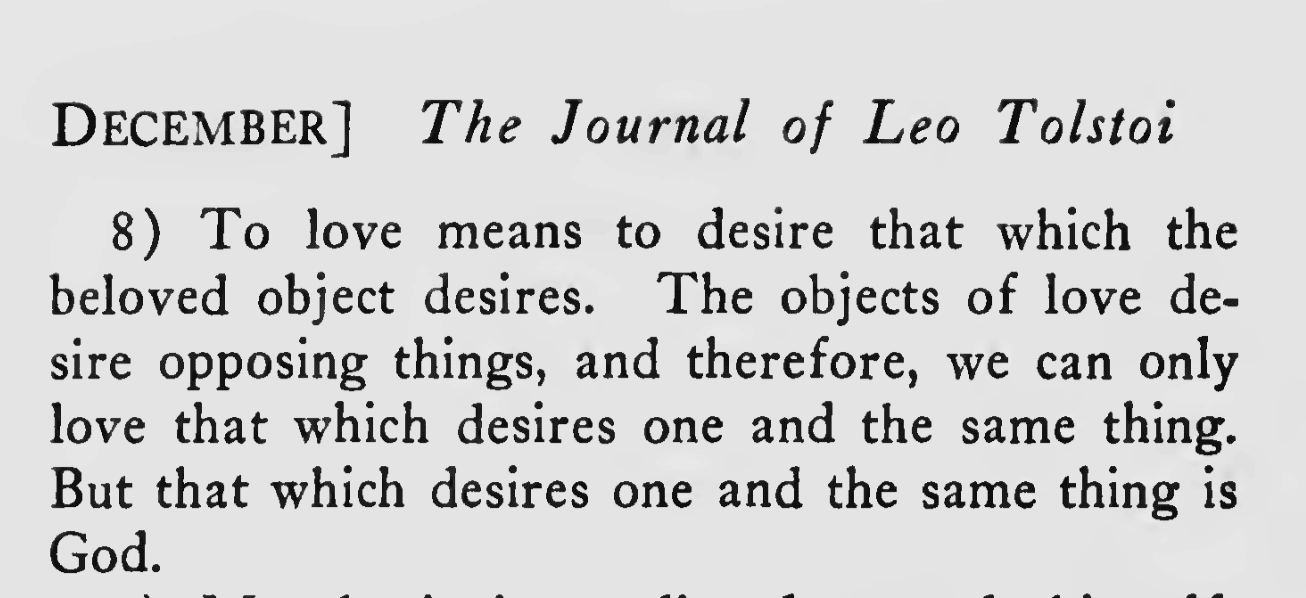
To love means to desire that which the beloved object desires.
The objects of love desire opposing things, and therefore, we can
only love that which desires one and the same thing. But that which
desires one and the same thing is God.
Man beginning to live, loves only himself, and separates himself
from other beings in that he constantly loves that which alone
constitutes his being. But as soon as he recognises himself as a
separate being, he recognises also his own love, and he is no longer
content with this love for himself and he begins to love other
beings. And the more he lives a conscious life, the greater and
greater number of beings he will begin to love, though not with such
a stable and unceasing love as that with which he loves himself, but
nevertheless, in such a way that he wishes good to everything he
loves, and he rejoices at this good, and suffers at the evil which
tries the beloved beings, and he unites into one all that he loves.
As life is love, why not suppose that my “self,” that which I consider
to be myself and love with a special love, is perhaps the union I
made in a former life of things which I loved, just as I am making
a union of things now. The other has already taken place and this
one is taking place.
Life is the enlargement of love, the widening of its borders, and
this widening is going on in various lives. In the present life,
this widening appears to me in the form of love. This widening is
necessary for my inner life and it is also necessary for the life of
this world. But my life can manifest itself not only in this form.
It manifests itself in an innumerable quantity of forms. Only this
one is apparent to me. #Leo Tolstoy #Modus Vivendi
References
Tolstoy, Leo (1927). The Journal of Leo Tolstoi. Alfred A. Knopf.
I was trying today to hide the notch on my M4 Macbook. I tried to use topnotch.app before, it has the problem of not being open source, but moreover it does not work nicely with dynamic wallpaper or folder wallpapers (whoever there's another reason not to use it even with single wallpaper). Another app I tried was only-switch. Which didn't work as well. I gave up and decided to (ask Claude to) write (generate) a script that will add black padding to my wallpapers. Code. #Programming #MacOS
02:07 Artemisia agreed to Tassi
I wonder if Artemisia Gentileschi was the one who agreed to the marraige of Tassi, and not her father:
As was typical of the time, the major issue of the trial was the fact that Tassi had violated the Gentileschi family's honor, and not the fact that he had violated Gentileschi herself. In the words of history professor Elizabeth S. Cohen: "The law gauged damage to economic and social assets rather than suffering and psychological trauma."
Overall, I didn't find her art so interesting.
05:25 An example to a bad design with multipass
I read before that Reddit does not allow users to change their usernames for a technical difficulty (or that's what they claim), they say that they've made the bad design decision of coupling usernames to their database scheme so bad. I was trying to work with mutlipass recently and found out that it does not support renaming instances, which I found strange, the issue has so much activity, anyone could have implemented that simple feature right? Well I decided I'm the one.
However, it turned to be much harder than letting users to clone and delete instances. Here's why from my comment there:
For anyone wondering why this was not implemented so far, it's actually a lot more invasive than just changing a label. I decided to have a look on the codebase and try to implement it myself. It looks like Multipass was built with the instance name acting as the primary key across the entire stack.
To safely rename an instance today, we have to atomically touch: 1. The Daemon's memory, swapping the key across 5+ different state maps while ensuring no race conditions. 2. On-disk storage i.e. renaming the actual vault/instances/<name>/ directory where the VM image lives. 3. Updating the internal JSON databases where paths are hardcoded to the old name. 4. the guest's etc/hostname is baked into the cloud-init ISO at creation time. We have to regenerate cloud_init.iso and rely on the instance picking up the new hostname on its next boot (which isn't always reliable depending on what the user has modified inside /etc/cloud).
The desktop app for Apple Music is so good, but also so buggy. I assume that this has to do with the fact that it's a system app, probably linked with many dynamic libraries or NSs so updating or releasing it is not as easy as the weekly spotify release. #musql
19:58 Make ef-dark from ef=themes great again
(defunsalih/fix-ef-dark-modeline(&rest_)(when(eq(carcustom-enabled-themes)'ef-dark)(set-face-attribute'mode-linenil:background"#0000":foregroundnil:boxnil:inheritnil)(set-face-attribute'mode-line-inactivenil:background"#0000":boxnil:inheritnil)(set-face-attribute'doom-modeline-barnil:background"#000000")(set-face-attribute'doom-modeline-bar-inactivenil:background"#1a1a1a")))(add-hook'enable-theme-functions#'salih/fix-ef-dark-modeline)(setqef-themes-variable-pitch-uit)(setqef-themes-variable-pitch-uinil); variable pitch for UI (mode line, tabs, etc.)(setqef-themes-mixed-fontst); mix variable + fixed pitch (great with org)(setqef-themes-headings'((1.(variable-pitchextrabold1.4))(2.(variable-pitchbold1.25))(3.(variable-pitchsemibold1.15))(t.(variable-pitch1.1))))(salih/fix-ef-dark-modeline)
William-Adolphe Bouguereau has two interesting paintings: A Young Girl Defending Herself Against Eros and Elegy. What's interesting is, in the former, it looks like a girl is fighting against love in a very joyful way, she is smiling and having fun in saying no, so does Eros enjoying her slight resistance of love, it's almost like he is saying I know you want love. The latter painting, I would believe, takes place in the same location, years after, the angel looks haggard, exhausted and almost depressed, the girl looks heartbroken and sad, it's like Eros had won his first battle in the former painting, and here we see how it ended. #Art
21:02 Message to Scientology
I was reading Anonymous' message to Scientology right now. I love how literate their messages are, it's sad that you can no longer write like that without people thinking you are GPTing. #LLMs
TIL that if you have a directory called “internal” in Go, and you try to import it from another package that is outside of the root, the Go compiler will return an error. All this time I thought that “internal” is a convention but turns out it’s also a compiler rule #Go
Music belonged to the same category as thought, both vibrated in the same movement and species. It possessed the same quality of a thought so intimate that upon hearing that music, the thought itself was revealed
RT: it should actually be illegal for me to a) see richard hanania post an article by nicholas decker about how sex trafficking is fake and b) recognize both those people’s names
18:54 Lispector on animals
Because there is also a great beauty in animals. And in any case, all that exists is beautiful, error as much as truth
Kevin Boone shows an interesting reason of why Linux might never become popular; making Linux more consumer-friendly would likely strip away the power, configurability, and culture that attract technical users. #Programming #Linux
What you may not realize is, you’ve actually signed up to be unpaid tech support for Microsoft’s “Visual Studio Installer”. You might notice GitHub Issues becoming less about your code and more about broken builds, specifically on Windows. You find yourself explaining to a contributor that they didn’t check the “Desktop development with C++” workload, but specifically the v143 build tools and the 10.0.22621.0 SDK. No, not that one, the other one. You spend less time on your project because you’re too busy being a human-powered dependency resolver for a 50GB IDE.
Just a kind reminder that this is because in number arithmetic theory, every number can be broken down into a unique product of prime numbers; if 1 were considered prime, you could multiply it endlessly into any factorization and that uniqueness would disappear. #Mathematics #Prime Numbers
All of a sudden, in a first experience of the shame, he felt inside him a horribly free and painful movement, a vague urge to shout or cry, some mortal thing opening in his chest a violent clearing that might have been a new birth
What I write is more than mere invention, it’s my obligation to tell about this one girl out of the thousands like her. And my duty, however artlessly, to reveal her life.
Writing — I tear things out of me in pieces the way a harpoon hooks into a whale and rips its flesh…
Her perfume is a crazy mystery. When inhaled deeply it touches the intimate depth of the heart and leaves the inside of the entire body perfumed
Needing is always the supreme moment. As the most daring joy between a man and a woman comes when the greatness of needing is such that we feel in agony and fright: without you I could not live
I could not understand and you could not understand that dispensing with hope — really means action, and today
Every day it will be the same thing: right at dusk I start to get melancholy and thoughtful. I know that the first drum on the mountain will make the night, I know that the third will already wrap me in its thunder.
Now I shall write you everything that comes into my mind with the least possible amount of policing. Because I feel attracted to the unknown
Hell, because the world held no more human meaning for me, and man no longer had human meaning for me
How ingenuous Joana seemed. She spoke of love in such a clear and straightforward manner for it was certain that nothing had been revealed to her so far through love
And so I ask you questions and these will be many. Because I am a question.
Through the living roach I am coming to understand that I too am whatever is alive. Being alive is a very high stage, it is something that I only reached now (Related to 02:43 alive, lit from within)
But all that was too refined for my human hoof. And I, I wanted beauty.
I could not understand and you could not understand that dispensing with hope — really means action, and today
Music belonged to the same category as thought, both vibrated in the same movement and species. It possessed the same quality of a thought so intimate that upon hearing that music, the thought itself was revealed
The cold runs down her back with icy feet but she is in no mood to play, she huddles up, wounded and unhappy. She dries herself without love, humiliated and miserable, wraps herself in the dressing-gown as in a warm embrace
Its essential quality was not to have any quantity, not to be measurable and divisible because everything which could be measured and divided had a beginning and an end. Eternity was not that infinitely great quantity that exhausted itself; eternity was succession.
I want inside this night that is longer than life, I want, inside this night, life raw and bloody and full of saliva. I want this word: splendidness, splendidness is the fruit in its succulence, fruit without sadness
Because there is also a great beauty in animals. And in any case, all that exists is beautiful, error as much as truth
Because what I suddenly found out is that the moment had come not only to understand that I must no longer transcend, but the instant had come to really no longer transcend. And to have now what I used to think should be for tomorrow
You will never read what I’m writing. And when I’ve noted down my secret of being—I shall throw it away as if into the sea
And I have no fear of failure. Let failure annihilate me, I want the glory of falling
Through the living roach I am coming to understand that I too am whatever is alive. Being alive is a very high stage, it is something that I only reached now
And if the whole business really is based on invading my privacy, then they should pay for it. They say that’s how it’s done in the United States
baits
Sorry for asking, does being ugly hurt?
— You sound like a mute trying to sing
honorable mention
I have to add a little something that’s very important for understanding the narrative: that it’s accompanied from beginning to end by a very slight and constant toothache, something to do with chipped enamel
I've been, proudly, attributed many times that I do have the God-gifted attribute of having really good mornings. And every day, I do my best to also have the attribution of being a person who is able to have good evenings, and good days, good weeks at some point. I'm take pride of being able to achieve that in my lifetime. And I will hold the hope of having, eventually and after my wither and death, the attribution of being able to have a good, exceptional and extraordinary life.
“The diary is a conversation with your truest shadow.”Naguib Mahfouz
Andromache in Frederic Leighton's painting does not look very sad, however, the surroundings of her look extremely sad, and the whole story too. Leighton shows her standing alone, dressed in dark clothing. My feeling is, the parts that hurts or supposed to be sad is how everyday life continues around her. Not caring much about her war or tragedy, and she herself have to carry on to continue living, she can not even stress enough sadness, you can't maintain genuine sadness for a long time, even if you wanted to. Related: Oh fuck, you're still sad?
I love when I red and feel warmth through my body when I'm engaged in intellectual activity or when doing an interesting reading. As if life insists on showing itself the moment it stirs within me. I love when I feel heated but not because of overstimulation but just for being so filled with live and sensation, I love how a self that's full of life reminds itself how not untouched by the life it is, but responsive to it. Lit from within, unmistakably alive. My poetry:
I redden,
heat finds me,
like a small flame remembering its nature.
My skin answers life,
quick to color,
as if something bright within me
refuses to stay unseen.
And in that quiet heat,
I know
I am filled with live.
Through the living roach I am coming to understand that I too am whatever is alive. Being alive is a very high stage, it is something that I only reached now
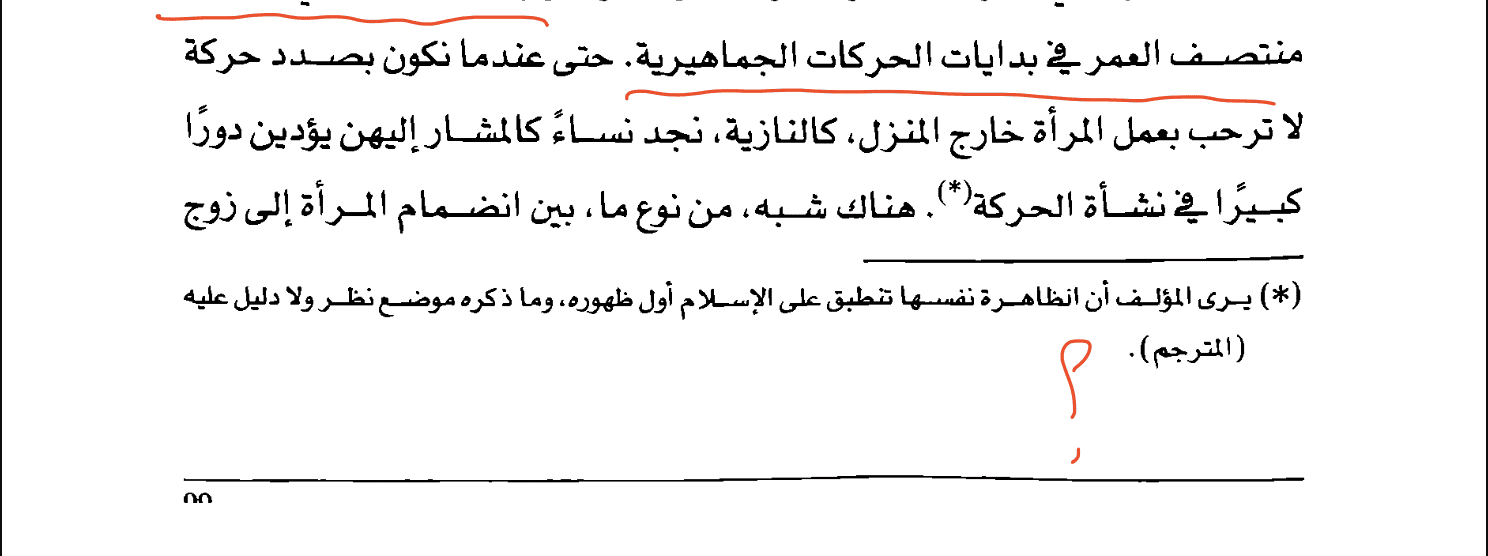
Apparently, the Arabic translator of (Hoffer 2010) found that Erich Fromm's interpretation about something is not pretty accurate from his point of view, so he decided to just remove it.
References
Hoffer, Eric (2010). The True Believer: Thoughts on the Nature of Mass
Movements. Kalima, Abu Dhabi Authority for Culture and Heritage.
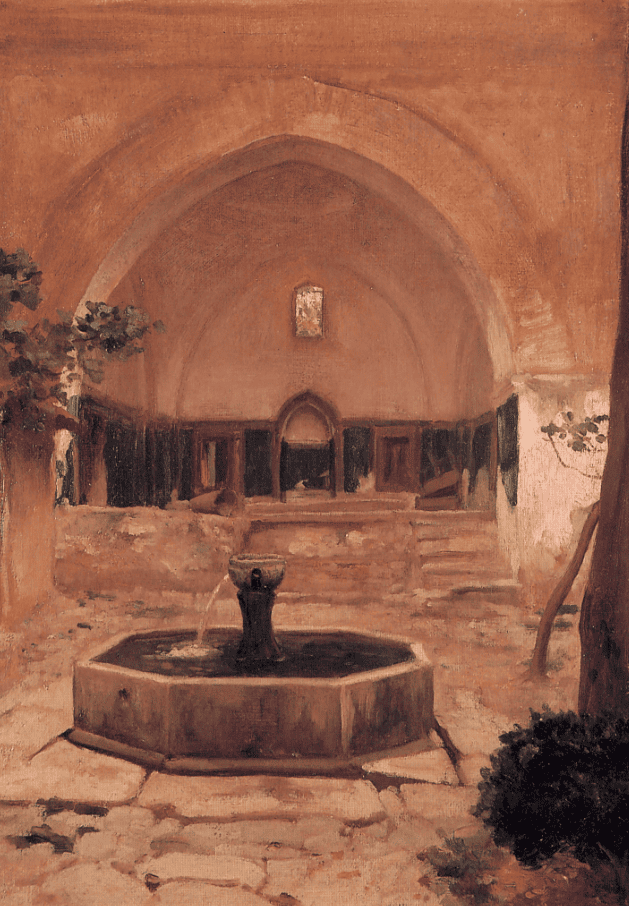
I genuinely miss when mosques looked like this, simple and messy yet cozy and very beautiful. When I was young, my Father used to take me to a mosque in our town were I used to do Hifz. It was called the Wastani mosque but this was only the colloquial name, as I grown up to learn that the name in the official government references is "The Antique Mosque" المسجد العتيق in Arabic. Although it didn't have a courtyard, that mosque had a very similar architecture and as similar dome. I never thought that it was beautiful when I was young (again, I used to go everyday for at least 4 years continuously, doing Kuttab with Dad), I just accepted it as a part of the town.
It had the same redness in the artwork, and sometimes a beautiful yellow vectors of light coming from the open fractals of the dome, that aging and its wither have produced. It was really beautiful. For some reason it reminds me of houses in Cinema Paradiso (1988).
Later, when I was in high-school, I found a book about the history of my town and other nearby towns, it was written by an agricultural engineer from the Ottoman empire, the book surprisingly mention the mosque by its name, and I realized how this mosque is old then and I decided that "once I get time" I will spend some time there again, preferably with my dad. However, I didn't expect to come back to town to find that people are happy that they demolished the mosque and are rebuilding it, by the help of an anonymous donor (it's been said that, that donor, is an ex-infamous drug dealer who was trying to repent to God, thus he rebuilt so many mosques around the areas and built new ones too, which is likely, I don't expect a lot of intellect from someone who builds a mosque instead of a school or any other utility needed much more than a mosque nowadays), and I felt sad for I couldn't find any pictures of the mosque. I know that some people filmed some places of it in some few occasions, but it never captured the beauty it had.
I learnt that I should never say "Once I get the time for it" again, for it may never be possible again. That being said, once I have the time, I will learn how to do good painting, and I will paint this beautiful mosque from my own memory.
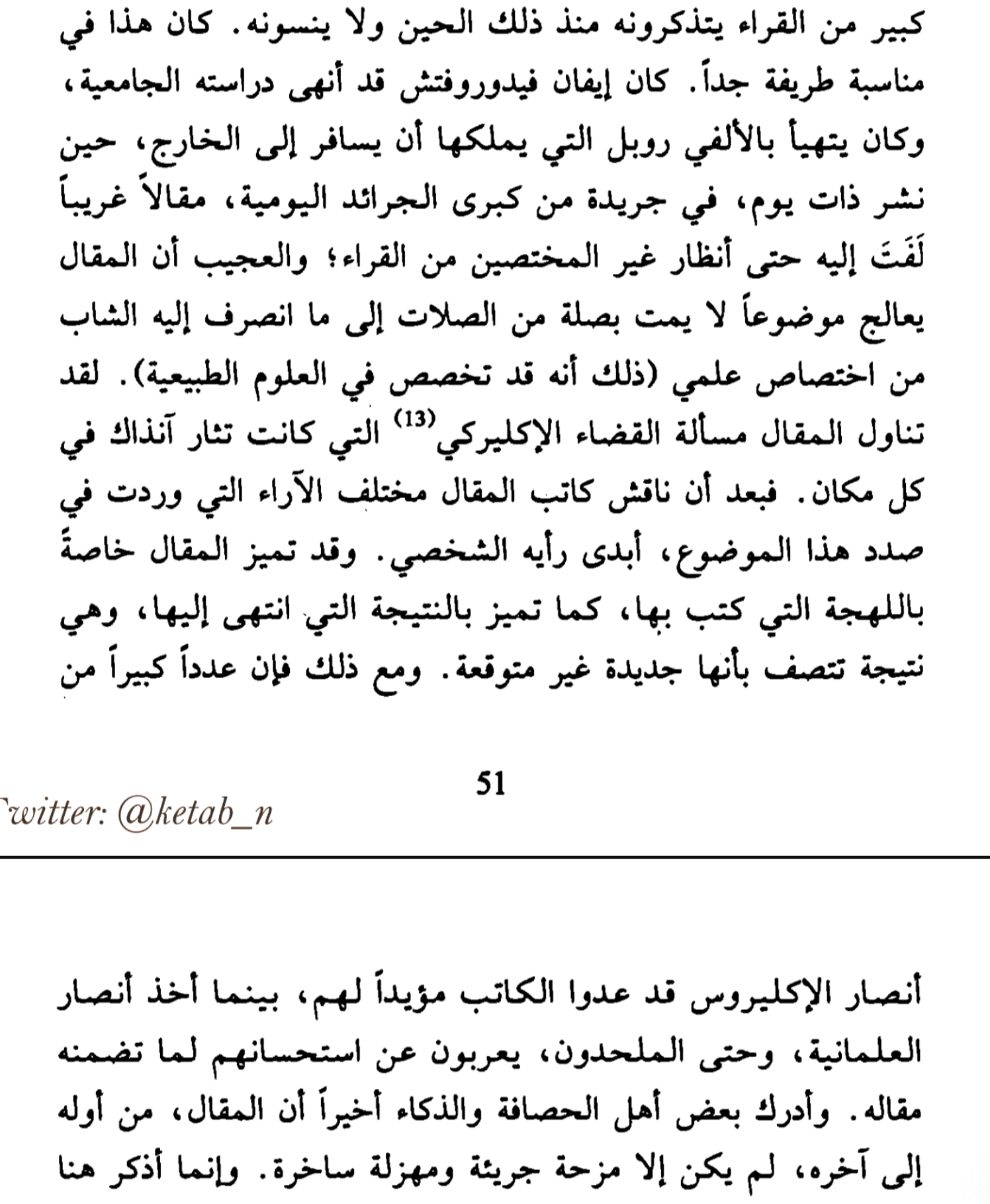
قرأت الإخوة كرامازوف منذ حوالي 9 سنوات وكنت مغرمًا بشخصية إيفان فيدوروفتش من بداية القصة، وكان بداية غرامي بعقله في الفقرة التالية:
وأذكر جيدًا أني توقفت لوهلة عند قراءة هذه الفقرة منذ 9 سنوات، كما فعلت في قراءتي الثانية للرواية منذ عامين، وكما فعلت اليوم أيضًا. وأذكر أني في غير مرة حاولت أتخيل كيف كان هذه المقالة بتخيلي لشخصية إيفان. واليوم قد عزمت على أن أسرد هذا التخيل. كتب إيفان فيدوروفتش:
يحتج المدافعون عن السلطة الكنسية بأن الدولة، بوصفها مؤسسة زمنية محضة، عاجزة عن بلوغ ضمير المجرم، وبالتالي عاجزة عن إصلاحه إصلاحاً حقيقياً. فالسارق يُودع السجن ثم يُطلق سراحه، فلا يلبث أن يعود إلى السرقة، لأن السجن حبس جسده ولم يمس روحه. أما الكنيسة، بأسرارها ورعايتها الروحية، فهي وحدها القادرة على إحداث التحول الباطني الذي يمنع التكرار. وهذا الاحتجاج، في حدود ما يدعيه، صحيح تماماً. فإنني زرت كثيراً من السجون ولم أقابل مجرماً واحداً تحول فيها إلى إنسان صالح، بينما زرت كثيراً من الأديرة ولم أقابل فيها راهباً واحداً لم يتب عن ماضيه.
ويحتج المدافعون عن السلطة المدنية بأن المحاكم الدينية، إذ تنطلق من مقدمات ميتافيزيقية لا يقبلها جميع المواطنين، لا تستطيع أن تفصل في المنازعات بالحياد اللازم. فالمحكمة المدنية، حين تستند إلى العقل والبرهان وحدهما، تقدم العدالة للمؤمن وغير المؤمنعلى حد سواء. وهذا الاحتجاج أيضاً، في حدود ما يدعيه، صحيح تماماً. فإنني حضرت كثيراً من المحاكم الكنسية ولم أشهد فيها حكماً واحداً لم يتوافق، بطريقة عجيبة، مع ما تقتضيه المصلحة اللاهوتية، بينما حضرت كثيراً من المحاكم المدنية ولم أشهد فيها حكماً واحداً أفسدته اعتبارات ما وراء الطبيعة.
والآن، ما الذي يترتب على هاتين الحقيقتين اللتين يبدو أنهما تناقضان إحداهما الأخرى؟
يترتب عليهما أمر في غاية البساطة، وأعجب كل العجب كيف لم يلحظه أحد قبلي. إذا كانت الكنيسة وحدها قادرة على إحداث الإصلاح الأخلاقي الحقيقي، فإن كل مؤسسة تدعي إصلاح المجرمين هي بالضرورة إما كنيسة متنكرة في ثياب أخرى، وإما مؤسسة فاشلة تمارس الاحتيال على نفسها وعلى المجتمع. ولننظر إلى السجون الحديثة: فيها قساوسة يزورون النزلاء، وفيها برامج للتربية الأخلاقية، وفيها أخصائيون نفسيون يستمعون إلى اعترافات المذنبين ويسعون إلى تغيير قلوبهم. فما هذه المؤسسات إلا أديرة نست اسمها الحقيقي. السجان فيها رئيس دير، والأخصائي النفسي كاهن اعتراف، ومجلس الإفراج المشروط مجمع كنسي يقرر من استحق الغفران. كل ما فعلته الحداثة أنها أعادت تسمية الأشياء مراعاة لمشاعر من يكرهون المصطلحات الدينية.
وإذا كانت المحكمة المدنية وحدها قادرة على تحقيق العدالة النزيهة، فإن كل محكمة كنسية تدعي الإنصاف هي بالضرورة إما محكمة مدنية متنكرة في أثواب كهنوتية، وإما مؤسسة ظالمة تخلط بين السلطة الروحية والمصلحة الدنيوية. ولننظر إلى المحاكم الكنسية حين تنظر في قضايا الاختلاس أو النزاع على الأملاك: هل تستشير النصوص المقدسة أم تستعين بالمحاسبين والمساحين؟ الجواب معروف. فالكنيسة، في ممارستها القضائية الفعلية، مؤسسة علمانية ترتدي الجبة والإكليل. إذًاالمحاكم الكنسية والمحاكم المدنية هي المحاكم ذاتها، وكانت كذلك منذ البداية.
ستقولون: إذا كانت المحاكم متماثلة في جوهرها، فكيف نفسر اختلاف أحكامها؟ لماذا تحرم الكنيسة من تطرده الدولة إلى السجن؟ ولماذا تفرض الدولة الغرامة حيث تفرض الكنيسة الكفارة؟ والجواب أن الأحكام ليست مختلفة في الحقيقة، بل هي الحكم ذاته معبراً عنه بلغات مختلفة. فالحرمان الكنسي هو السجن في صورة روحية، إذ ما السجن إلا إقصاء المذنب عن المجتمع ومنعه من المشاركة في حياته، وهذا بعينه ما يفعله الحرمان. والكفارة هي الغرامة في صورة تعبدية، إذ ما الغرامة إلا انتزاع شيء ذي قيمة من المذنب لقاء ذنبه، وهذا بعينه ما تفعله الكفارة. القاضي المدني الذي يحكم على رجل بخدمة المجتمع قد أعاد اختراع الكفارة الكنسية من غير أن يستخدم اللاتينية. والأسقف الذي يمنع خاطئاً من تناول القربان المقدس قد أعاد اختراع الحبس الانفرادي من غير أن يبني جدراناً. كل عقوبة هي العقوبة ذاتها، وكل إصلاح هو الإصلاح ذاته، وكل محكمة هي المحكمة ذاتها. والتنوع الظاهري بينها ليس إلا خطأ في الترجمة بين لغتين تقولان الشيء نفسه. فإن قلتم: لكن الكنيسة تقدم ما لا تستطيع الدولة تقديمه، وهو الخلاص الأبدي. فالدولة قد تصلح الإنسان لهذه الحياة، لكن الكنيسة تعده لما بعد الموت. أقول: انظر إلى خطاب المصلحين العلمانيين. إنهم أيضاً يدعون إعداد الناس للأبدية، لكنهم يسمونها أسماء أخرى: الأجيال القادمة، مستقبل الإنسانية، حكم التاريخ، ذاكرة العالم. فالملحد الذي يعمل على تحسين العالم يؤمن أن ناتج عمله سيستمر إلى ما لا نهاية، وأن الأجيال التي لم تولد بعد ستذكره بالثناء أو اللوم. أي أنه يسعى إلى الخلود ذاته، ولكن بعد إزالة الغلاف الديني عنه. أورشليم الجديدة تحولت إلى اليوتوبيا، والملكوت تحول إلى التقدم، لكن التصميم المعماري واحد. فإن قلتم: لكن الدولة تؤسس نفسها على العقل، بينما تؤسس الكنيسة نفسها على الوحي. أليس هذا الفرق جوهرياً وحاسماً؟ أقول: ما الوحي إلا العقل منسوباً إلى الله؟ وما العقل إلا الوحي منسوباً إلى الإنسان؟ والفيلسوف الذي يعلن "أنا أفكر إذن أنا موجود" يزعم أنه تلقى يقيناً لا يقبل الشك من مصدر مطلق لا يخطئ، وهذا بعينه تعريف الوحي عند اللاهوتيين. الفرق الوحيد أنه يرفض تسمية هذا المصدر باسمه التقليدي. التنوير، في المحصلة، مسيحية بإضاءة كهربائية بدلاً من الشموع.
والآن أنتقل إلى التوصيات العملية. أولاً: يجب على المحاكم الكنسية أن تعترف رسمياً بأنها محاكم مدنية ترتدي أثواباً مختلفة. وأرى أن يُصدر البابا مرسوماً بذلك، يُتلى في جميع الكاتدرائيات صباح أحد الآحاد، ثم يُحرق فوراً بعد تلاوته حتى لا يبقى له أثر مكتوب. ثانياً: يجب على المحاكم المدنية أن تعترف رسمياً بأنها مؤسسات دينية تستخدم مصطلحات حديثة. وأرى أن يُصدر البرلمان قانوناً بذلك، يُنشر في الجريدة الرسمية، ثم تُسحب جميع النسخ من التداول في اليوم التالي. ثالثاً: يجب تشكيل لجنة مشتركة من رجال الدين والقضاة المدنيين، مهمتها الاجتماع مرة كل شهر للاتفاق على أنهم يفعلون الشيء ذاته، ثم الافتراق والعودة إلى التظاهر بالاختلاف أمام الجمهور. رابعاً: يجب إنشاء كرسي جامعي جديد، يُسمى "كرسي علم التماثل بين المتناقضات الظاهرية"، يشغله أستاذ لا يؤمن بشيء ولا يكفر بشيء، مهمته إصدار تقارير سنوية تؤكد أن كل شيء هو كل شيء آخر، وأن الخلافات كلها لغوية. أما التمويل، فأقترح أن يتشارك فيه الفاتيكان والجمهورية الفرنسية بالتساوي، على أن يدّعي كل منهما أمام أنصاره أنه يدفع أقل.
Kierkegaard spent four hundred pages trying to say what love is. IMO he failed magnificently. Following fragments are my own failure.
Kierkegaard distinguishes between Elskov and Kjerlighed i.e. erotic love and the love of God. The former is preferential; the latter is duty. The former selects; the latter is commanded.
Preferential love is at bottom self-love. The beloved is called "the other I," the friend "the other self." But if the object of my love is another version of myself, how have I left my own house? The neighbor alone stands outside the circle of the I. I will show in 24 that even this shattering may be a form of gift.
In the former kind, lovers claims eternal faithfulness, but by what authority? They swear by their love to love forever, instead of swearing by eternity to love. In my experience poetry cannot vouch for itself.
Spontaneous love promises but does not endure. It has existence but not what Kierkegaard calls "enduring continuance." It is subject to change, to jealousy, to habit, to despair. Only that which becomes duty can become eternal. Yet I wonder, as I will in 26, whether a love that cannot fail is still recognizable as love at all.
The poet is not a Christian, qua poet.
"You shall love." The command seems to contradict love or whatever I think love is. Love ought to be free, spontaneous, unchosen. How can duty coexist with devotion? Consider only when love becomes duty is it secured against change. The will that says "I shall" stakes everything on the eternal; the feeling that says "I want" is hostage to tomorrow. One might object, as I do in 30, that this security comes at too high a price.
It's claimed that preferential love makes one blind. But this blindness is only a sharper sight for the one beloved and a deeper blindness to all others (do not that I'm not speaking about lust, but actual preferential love). All forms of blindness have their justification and neither can claim the whole truth.
IMHO Self-love wants the exceptional. It seeks what is rare and admirable and distinguished. But is it a perfection in love that it can love only the extraordinary? If so, then God is poorly placed, since for Him the extraordinary does not exist; all are equal before Him. To love only the rare is not strength but limitation. This much is true. See also 28.
The aforementioned kind of love and friendship are good fortune. One cannot deserve them and also one cannot command them into existence. They happen or do not happen.
Someone who cannot give up his beloved has made an idol and the friend who cannot release his friend has formed an alliance against the world. This is the critique. And yet, as I will suggest in 32, there may be a kind of devotion that the critique cannot reach.
"One hundred cannons cannot wake you, but the eternal can." I think Kierkegaard knew what habit is.
Death can take love and betrayal can remove friend.
He never had to renounce Regine.
Only one being can be loved more than oneself, and this has to do with the command being "as yourself" and not more.
If you search the New Testament and you will not find a single word about erotic love in the poet's sense, not a single verse on friendship in the Greek sense.
Unlike the other, the commanded love does not require that you wander the earth searching for the beloved, as the romantic imagination suggests. Open your door: the neighbor stands there. There is no delay, no quest, no riddle. And yet this shortest path is the hardest, precisely because it offers no selection, no drama, no story worth telling.
Other loves are defined by their objects; the beloved must be good and beautiful and the friend must be wise, the admired one must be exceptional. But the divine has no such qualifications; therefore love for God is defined only by love itself.
Health and love are not the same kind of thing, and what counts as weakness in the body may be depth in the soul.
Spontaneous love is in despair, even when happy since it stakes everything on what can change. Only the love that becomes duty escapes despair, because it has undergone eternity's change. This is the argument for duty, and it is powerful. But despair, as may not be the worst thing; there are worse fates than mourning what was loved and lost.
The equality of Christianity is not the equality of politics. This is a noble vision, whatever one thinks of its practicability.
The beloved is called "the other I." But God is "the other you." The I and the other I form a closed circuit; the I and the you break the circuit open.
Love of the divine sees it only with closed eyes. The open eye has its own wisdom.
In erotic love, the two become one I. In loving God, the two remain two, eternally distinct spirits. The I does not swallow the you; the you stands as an independent claim. This is where preferential love begins to reassert itself, for in the fusion of erotic love something is created that meeting alone cannot produce. The one I is also the generation of a new reality, sometimes a child, sometimes a shared life, sometimes simply a We that neither party could have produced alone.
Is there not something right in the devotion?
If love cannot fail, if the neighbor can always be replaced (as in 13), what exactly is being risked?
Kierkegaard writes elsewhere that to love is to presuppose that love is in the other. This is why divine love can never fail since it does not wait for the other to be lovable but sees already. So to presuppose love in the other is perhaps to fail to see the other at all i.e. to see only what I have projected. The "as yourself" in the commandment may cut both ways, it may be permission to love the self rightly.
Preferential love has something to say for itself: dissimilarity is not only a costume. The particular face of the beloved and the specific voice of the friend are not accidents but maybe a medium through which love arrives. To love God is to love anyone; to love the beloved is to love this one, irreplaceable, never to be seen again. There is a loss in universality that no amount of eternal security can compensate.
Kierkegaard says that if you invite only friends and relatives, that is dinner; if you invite the poor, the crippled, the blind, that is the banquet.
Preferential love is competitive. The lovers stand together against the world and friends form an alliance that excludes all others. But divine love forms no alliance.
The command to love is an offense since love must be free. It offends the natural man, who wants to choose whom he loves. But offense is not the same as error; what offends may also be true.
God need not reciprocate. You love because you shall, and in this shall you are freed from the endless anxious judgment of whether the other is worthy. A devotion that does not judge the beloved worthy but simply loves and without duty and without command. Also without shall.
Kierkegaard says that love is known by its fruits. But giving to the poor and clothing the naked, all can be done without love. Joy of preferential love may be more real than any duty because it does not need to justify itself.
Love must be commanded but once commanded it must become free. I do not know how to solve this. Preferential loves know nothing about this because they were never commanded, they flourish, and (as in 5) die.
It might be one of the only things, or maybe the only thing, that makes life bearable. Divine love cannot be lost because God is always there; erotic love can be lost utterly, and therefore it is, in its own way, more serious.
The other kind of love and friendship are good fortune but not virtue.
The commandment remains. Maybe I am to fulfill it or maybe not. This too is the work of love. But so is the other work: staying up at night, waiting for what may not come, refusing to be comforted by the God who is always already there.
These notes were extracted from Emacs org-noter file of (Kierkegaard 1995) which I've been reading since the 3rd of Jan and until 4 days ago. Few of the are so based off the book, and I don't attribute them to be my genuine thoughts. #Modus Vivendi #Philosophy #Love
[2026-02-13 Fri 01:03] Noticed how Elizabeth Barrett Browning poem relates to the neighbor's love definition; wussu.com/poems/ebbitmlm.htm
References
Kierkegaard, Søren; Hong, Edna Hatlestad; Hong, Howard
Vincent (1995). Works of love. Princeton University Press. Link
Strive for conciseness and clarity in oral or written reports. If there is one bane of an executive's existence, it is the man who takes a half hour of rambling discourse to tell him what could be said in one sentence of twenty words. There is a curious and widespread tendency among engineers to surround the answer to a simple question with so many preliminaries and commentaries that the answer itself can hardly be discerned. It is so difficult to get a direct answer out of some men that their usefulness is thereby greatly diminished. The tendency is to explain the answer before answering the question. To be sure, very few questions admit of simple answers without qualifications, but the important thing is to state the crux of the matter as succinctly as possible first. On the other hand, there are times when it is very important to add the pertinent background or other relevant facts to illuminate a simple statement. The trick is to convey the maximum of significant information in the minimum time, a valuable asset to any man
Be extremely careful of the accuracy
Be extremely careful of the accuracy of your statements. This seems almost trite, and yet many engineers lose the confidence of their superiors and associates by habitually guessing when they do not know the answer to a direct question. It is certainly important to be able to answer questions concerning your responsibilities, but a wrong answer is worse than no answer. If you do not know, say so, but also say, ”I'll find out right away." If you are 'not certain, indicate the exact degree of certainty or approximation upon which your answer is based. A reputation for dependability and reliability can be one of your most valuable assets. This applies, of course, to written matter, calculations, etc., as well as to oral reports. It is definitely bad business to submit a report to the boss for approval without first carefully checking it yourself, and yet formal reports are sometimes turned in full of glaring errors and omissions.
You owe your boss keeping him informed of all Significant developments
This is a corollary of the preceding rules: An executive must know what's going on. The main question is: How much must he know—how many of the details? This is always a difficult matter for the new man to get straight. Many novices hesitate to bother the boss with too many reports, and it is certainly true that it can be overdone in this direction, but in by far the majority of cases the executive's problem is to extract enough information to keep adequately posted. For every time he has to say, "Don't bother me with so many details," there will be three times he will say, “Why doesn't someone tell me these things?" Bear in mind that he is constantly called upon to account for, defend, and explain your activities to the ”higher-ups," as well as to co-ordinate these activities into a larger plan. In a nutshell, the rule is therefore to give him promptly all the information he needs for these two purposes
Never invade the domain of any other division without the knowledge and consent of the executive in charge
Never invade the domain of any other division without the knowledge and consent of the executive in charge. This is a very common offense, which causes no end of trouble. Exceptions will occur in respect to minor details, but the rule applies particularly to:
The employment of a subordinate. Never offer a man a job, or broach the matter at all, without first securing the permission of his boss. There may be excellent reasons why the man should not be disturbed.
Engaging the time or committing the services of a subordinate for some particular project or trip. How would you feel, after promising in a formal meeting to assign one of your men to an urgent project, to discover that some other executive had had the gall to send him on an out-of-town trip without attempting to notify you? Yet it has been done!
Dealings with customers or outsiders, with particular reference to making promises or commitments involving another division. In this connection bear in mind especially that, when you are in the “field” or the “districts,” you are on the premises of the district manager or local office, and that all transactions must be with the manager’s permission just as if you were in his home.
Performing any function assigned to another division or individual. Violations of this law often cause bitter resentments and untold mischief. The law itself is based upon three underlying principles:
(a) Most people strongly dislike having anyone “muscle” into their territory, undermining their job by appropriating their functions.
(b) Such interference breeds confusion and mistakes. The man in charge of the job usually knows much more about it than you do, and even when you think you know enough about it, the chances are better than even that you’ll overlook some important factor.
(c) Nine times out of ten when you’re performing the other fellow’s function, you’re neglecting your own. It is rarely that any engineer or executive is so caught up in his own responsibilities that he can afford to take on those of his colleagues.
There is a significant commentary on this last principle which should also be observed: In general you will get no credit or thanks for doing the other fellow’s job for him at the expense of your own. But it frequently happens that, if you can put your own house in order first, an understanding of and an active interest in the affairs of other divisions will lead to promotion to a position of greater responsibility. Many a man has been moved up primarily because of a demonstrated capacity for taking care of other people’s business as well as his own.
In all transactions be careful to “check in” everyone who has a right to be in
In all transactions be careful to “check in” everyone who has a right to be in. It is extremely easy, in a large corporation, to overlook the interests of some division or individual who does not happen to be represented, or in mind, when a significant step is taken. Very often the result is that the step has to be retracted or else considerable damage is done. Even when it does no apparent harm, most people do not like to be left out when they have a stake in the matter, and the effect upon morale may be serious.
Of course there will be times when you cannot wait to stand on ceremony and you’ll have to go ahead and “damn the torpedoes.” But you cannot do it with impunity too often.
Note particularly that in this and the preceding item the chief offense lies in the invasion of the other man’s territory without his knowledge and consent. You may find it expedient on occasions to do the other man’s job for him, in order to get your own work done, but you should first give him a fair chance to deliver the goods or else agree to have you take over. If you must offend in this respect, at least you should realize that you are being offensive.
Promises, schedules, and estimates are necessary and important instruments in a well-ordered business.
Promises, schedules, and estimates are necessary and important instruments in a well-ordered business. Many engineers fail to realize this, or habitually try to dodge the irksome responsibility for making commitments. You must make promises based upon your own estimates for the part of the job for which you are responsible, together with estimates obtained from contributing departments for their parts. No one should be allowed to avoid the issue by the old formula, “I can’t give a promise because it depends upon so many uncertain factors.”
Consider the “uncertain factors” confronting a department head who must make up a budget for an entire engineering department for a year in advance! Even the most uncertain case can be narrowed down by first asking, “Will it be done in a matter of a few hours or a few months—a few days or a few weeks?” It usually turns out that it cannot be done in less than three weeks and surely will not require more than five, in which case you’d better say four weeks. This allows one week for contingencies and sets you a reasonable bogie under the comfortable figure of five weeks. Both extremes are bad; a good engineer will set schedules which he can meet by energetic effort at a pace commensurate with the significance of the job.
As a corollary of the foregoing, you have a right to insist upon having estimates from responsible representatives of other departments. But in accepting promises, or statements of facts, it is frequently important to make sure that you are dealing with a properly qualified representative of the other section. Also bear in mind that when you ignore or discount another man’s promises you impugn his responsibility and incur the extra liability yourself. Of course this is sometimes necessary, but be sure that you do it advisedly. Ideally, another man’s promises should be negotiable instruments, like his personal check, in compiling estimates.
Cultivate the habit of “nailing matters down” to their simplest terms
Cultivate the habit of “nailing matters down” to their simplest terms. The faculty for reducing apparently complicated situations to their basic, essential elements is a form of wisdom that must usually be derived from experience, but there are marked differences between otherwise comparable individuals in this respect. Some people seem eternally disposed to “muddy the water,” or they “can never see the woods for the trees,” etc. Perhaps a man cannot correct such an innate tendency simply by taking thought, but it appears to be largely a matter of habit—a habit of withdrawing mentally to a suitable vantage point so as to survey a mass of facts in their proper perspective, or a habit of becoming immersed and lost in a sea of detail. Make it practice to integrate, condense, summarize, and simplify your facts rather than to expand, ramify, complicate, and disintegrate them.
Many meetings, for example, get nowhere after protracted wrangling until somebody finally says, “Well, gentlemen, it all boils down simply to this …,” or “Can’t we agree, however, that the basic point at issue is just this …,” or, “After all, the essential fact remains that …”
This sort of mental discipline, which instinctively impels a man to go down to the core to get at the crux of the matter, is one of the most valuable qualities of a good executive.
TODO
Read the executive section in the future..
SCHEDULED: <2027-12-01 Wed>
References
King, W. J. (1944). The Unwritten Laws of Engineering. The American Society of Mechanical Engineers.

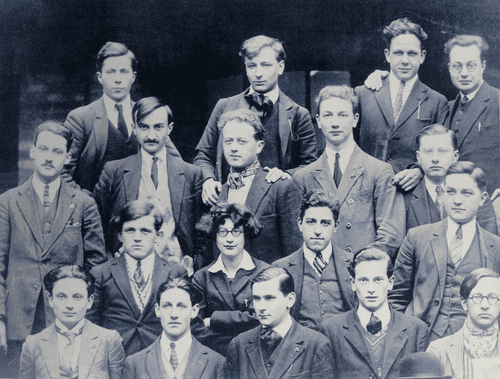
 Reading Joseph Mossad's article on the Arab Spring from 2012, shapes an interesting view of that naming. I was learning recently about Edward Said's view on how authority affects shaping of knowledge,
 In
In  There are two aspects to this. The desire to learn and the utility of learning. These are two very different things. Arguably the best programmers I have known have been explorers and hopped around a lot. Their primary skills have been flexibility and curiosity. The point here was their curiosity, not what they were curious about. Curiosity enabled them to attack new problems quickly and find solutions when others couldn't. Very often those solutions had nothing to do with skip lists or bubble sort. Studying algorithms is useful for general problem solving and hey, as a bonus, it helps sometimes when you are solving a real world problem, but staying curious is what really matters.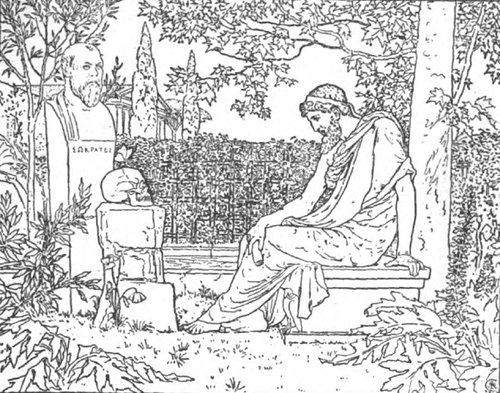
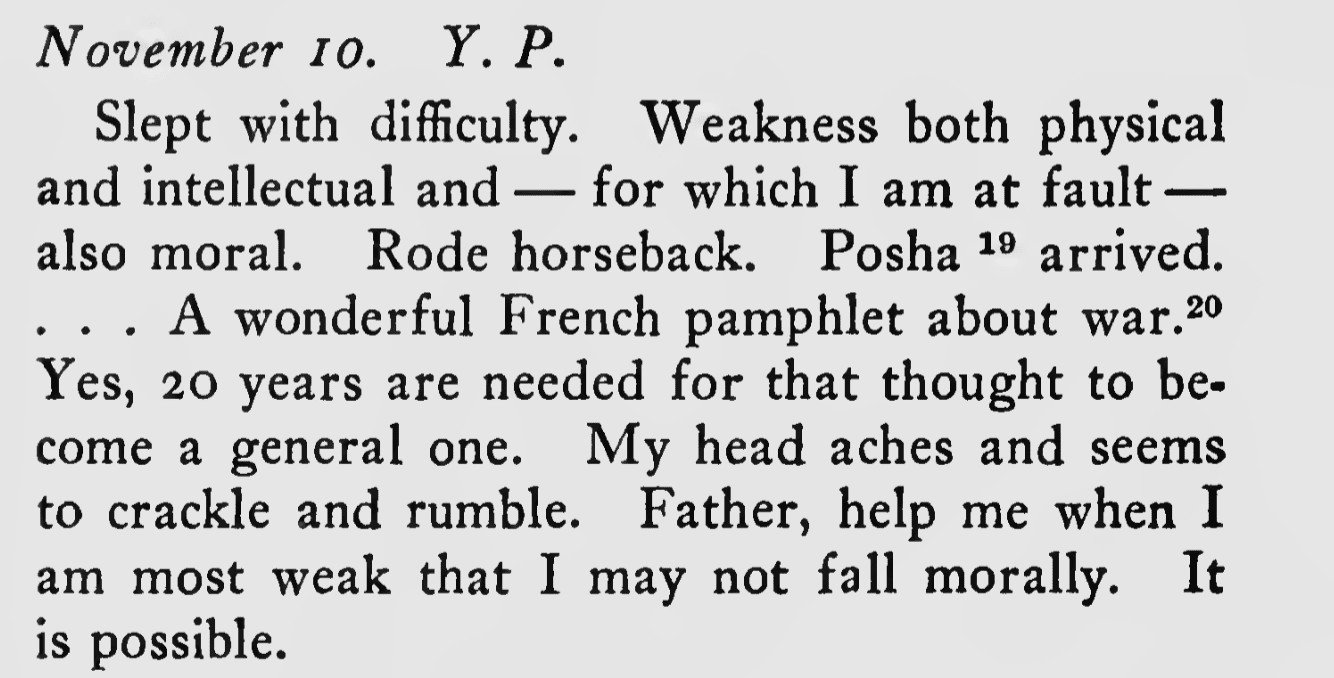
 I wonder if




 Be extremely careful of the accuracy of your statements. This seems almost trite, and yet many engineers lose the confidence of their superiors and associates by habitually guessing when they do not know the answer to a direct question. It is certainly important to be able to answer questions concerning your responsibilities, but a wrong answer is worse than no answer. If you do not know, say so, but also say, ”I'll find out right away." If you are 'not certain, indicate the exact degree of certainty or approximation upon which your answer is based. A reputation for dependability and reliability can be one of your most valuable assets. This applies, of course, to written matter, calculations, etc., as well as to oral reports. It is definitely bad business to submit a report to the boss for approval without first carefully checking it yourself, and yet formal reports are sometimes turned in full of glaring errors and omissions.
 This is a corollary of the preceding rules: An executive must know what's going on. The main question is: How much must he know—how many of the details? This is always a difficult matter for the new man to get straight. Many novices hesitate to bother the boss with too many reports, and it is certainly true that it can be overdone in this direction, but in by far the majority of cases the executive's problem is to extract enough information to keep adequately posted. For every time he has to say, "Don't bother me with so many details," there will be three times he will say, “Why doesn't someone tell me these things?" Bear in mind that he is constantly called upon to account for, defend, and explain your activities to the ”higher-ups," as well as to co-ordinate these activities into a larger plan. In a nutshell, the rule is therefore to give him promptly all the information he needs for these two purposes
 Never invade the domain of any other division without the knowledge and consent of the executive in charge. This is a very common offense, which causes no end of trouble. Exceptions will occur in respect to minor details, but the rule applies particularly to:
 In all transactions be careful to “check in” everyone who has a right to be in. It is extremely easy, in a large corporation, to overlook the interests of some division or individual who does not happen to be represented, or in mind, when a significant step is taken. Very often the result is that the step has to be retracted or else considerable damage is done. Even when it does no apparent harm, most people do not like to be left out when they have a stake in the matter, and the effect upon morale may be serious.
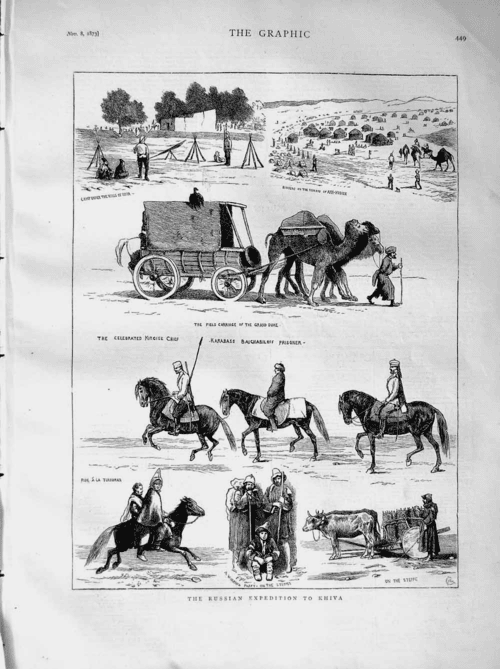 Promises, schedules, and estimates are necessary and important instruments in a well-ordered business. Many engineers fail to realize this, or habitually try to dodge the irksome responsibility for making commitments. You must make promises based upon your own estimates for the part of the job for which you are responsible, together with estimates obtained from contributing departments for their parts. No one should be allowed to avoid the issue by the old formula, “I can’t give a promise because it depends upon so many uncertain factors.”
 Cultivate the habit of “nailing matters down” to their simplest terms. The faculty for reducing apparently complicated situations to their basic, essential elements is a form of wisdom that must usually be derived from experience, but there are marked differences between otherwise comparable individuals in this respect. Some people seem eternally disposed to “muddy the water,” or they “can never see the woods for the trees,” etc. Perhaps a man cannot correct such an innate tendency simply by taking thought, but it appears to be largely a matter of habit—a habit of withdrawing mentally to a suitable vantage point so as to survey a mass of facts in their proper perspective, or a habit of becoming immersed and lost in a sea of detail. Make it practice to integrate, condense, summarize, and simplify your facts rather than to expand, ramify, complicate, and disintegrate them.