Opening this PNG in Chrome shows a different image than in Safari or any desktop app
This post was discussed in HackerNews
Check this beautiful painting, Pleading, an artwork by Sir Lawrence Alma-Tadema:

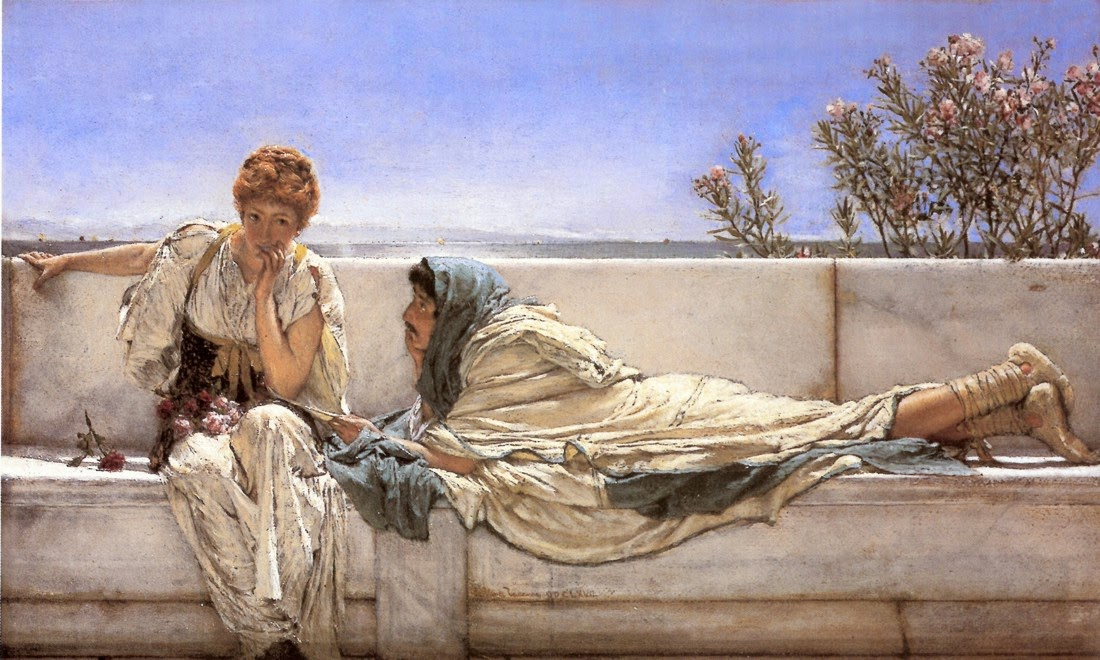
My website contains some of these artworks, you're probably looking at one now on the right side of the page if you are reading from a desktop browser, I sent one of the pages to my friend and he told me that the image looks foggy, and I spent hours debugging a nasty edge case in how browsers handle PNG color profiles.
What's going on
You open a PNG screenshot in your desktop app, it looks great, you include it in a web page suddenly there's a white, foggy veil over everything. The contrast is wrong, colors look washed out, and you're left wondering if the file got corrupted somehow. The instinct? “Something must be wrong with the image encoding.” Maybe it's alpha transparency? Gamma? Some weird metadata? (will tbh this was not really my instinct, I first debugged my web server for 20 minutes.)
Attempt 1: Strip Metadata and Fix Alpha
The first suspect is usually alpha channel issues or embedded metadata:
mogrify -strip -alpha off -alpha on -colorspace sRGB *.pngResult: No change. The images still look foggy in Chrome.
Attempt 2: Fix the Gamma
When you run identify -verbose on the image, you might see:
Gamma: 0.454545
Aha! Surely this is a gamma correction issue. Chrome must be applying gamma math differently than desktop apps.
mogrify -gamma 2.2 -colorspace sRGB -strip *.pngResult: The image gets even more foggy. Now it's worse!
(fun-related fact: ImageMagick's identify command
reports an assumed gamma for PNG decoding, not necessarily the
presence of an actual gAMA chunk in the file. You were chasing a
phantom.)
Attempt 3: Nuclear option
Fine, let's just rewrite all the pixels from scratch:
mogrify -alpha remove -background white -flatten -colorspace sRGB *.pngResult: Still foggy. Nothing changed.
Because the problem isn't in the pixel data at all.
Attempt 4: Remove the gAMA Chunk
Maybe it's that pesky gamma chunk after all. Let's use pngcrush to
remove it without touching the pixels:
pngcrush -ow -rem gAMA -rem cHRM -rem iCCP -rem sRGB *.pngResult: Still no change.
Plot twist; here was never a gAMA chunk to begin with!
The Smoking Gun
After all these failed attempts, it's time to actually look at what's in the PNG file:
pngcheck -v image.pngThe output reveals the truth:
chunk iCCP at offset 0x00025, length 5147
  profile name = ICC Profile, compression method = 0 (deflate)
  compressed profile = 5134 bytes
There it is: an embedded ICC color profile, about 5KB in size.
No gAMA chunk. No broken alpha. Just an ICC profile
What's Really Happening
(1) The PNG contains an embedded ICC color profile* (likely Display-P3 or another wide-gamut color space), (2) Chrome fully honors ICC profiles and performs proper color management (3) Desktop image viewers often ignore or approximate ICC profiles to keep things simple.
Result: Chrome shows you what the image actually looks like according to its embedded profile, while desktop apps (and apparently Safari) show you a “helpful lie”.
The paintings came from the internet, likely screenshots from macOS, iOS, or modern web tools that default to the Display-P3 color space. The pixel values are encoded for Display-P3, but when Chrome renders them, it respects that color space. Desktop apps? They just assume sRGB and move on.
You don't want to strip the ICC profile, that would leave Display-P3 pixel values being interpreted as sRGB, making things worse. You need to convert the pixels to sRGB:
magick mogrify -profile /System/Library/ColorSync/Profiles/sRGB\ Profile.icc *.pngThis command does three things: 1. Reads the embedded ICC profile 2. Converts the pixel values from that color space to sRGB 3. Embeds a correct sRGB ICC profile
After running this, Chrome will display the images correctly, matching what you saw in your desktop apps all along.
Unironically we're living in a world where modern devices support Display-P3, DCI-P3, and other wider color spaces but some apps do full color management, others fake it.
The “helpful lies” that desktop image viewers tell you (ignoring ICC profiles, making assumptions about color space) work great until you need actual color accuracy. Then they break down.
Takeaways:
- Chrome was not wrong. it's doing proper color management by respecting the embedded ICC profile
- Desktop apps might lie. they ignore color profiles to avoid confusion, but this masks the real issue
- Identify might mislead you. the “Gamma” value it reports is often ImageMagick's assumption, not file metadata
- Convert, don't strip. When dealing with ICC profiles, you must convert pixel values to the target color space, not just remove the profile